I've been meaning for some time to take up this discussion again. How does a writer make her readers feel empathy, or compassion (maybe the same thing, maybe not) for her characters? The question goes hand-in-hand with recent discussions of how/why/whether characters must be "likable." I'm glad that conversation is finally well underway; it feels like I've been grousing about how stupid that terminology is for years. And one thing I never really grasped till recently was how gendered the "likable" requirement is. Women characters, it seems, must be "good," while men are only required to be interesting. Let's make "interesting" our universal standard from now on, shall we?*
On Glimmer Train's website, Geoff Wyss writes: "[M]y favorite characters in literature are those mysteriously human enough to startle me into empathy. It's that word mystery
that seems to be the point: The characters that most powerfully evoke
my compassion are the ones who, paradoxically, most resist being known." This resistance to being known is precisely what makes the characters appear realistic, because, Wyss points out, "we
don't understand people in real life, not in the sense of comprehending
them and holding their keys, not even our friends, not even our
husbands and wives, not even close."
I agree. Compassion and empathy arise, first and foremost, out of curiosity. You may never "like" a character or a person, much less understand them, but you can find him--or let's say, for the sake of advancing our feminist agenda, her--interesting. And, at least for fiction, that's enough. Better than enough--necessary.
Wyss further addresses another little peeve of mine, that old saw that "story begins with character" (perhaps a mistranslation of the maxim "character is plot," which Wyss restates here). What that *cannot* mean is first constructing a character outside of any context, or, in Wyss's words, "monstering
characters together from a charnel pile of traits—'Let's make him
bigoted but sentimental, obsessed with film noir, and
hypochondriacal'—and sending them into my stories with their
stitch-lines showing." I swear, in writing workshops, I've been told to do exactly this, and it does not work. For me, character and context evolve together in a close, unending dialetic. Personally I like to start with the situation and see who shows up there; then I turn the character back to face the situation and see what she does to it, what it does to her in turn, and on and on.
But I have still created monsters from time to time. In fact, early in writing my first novel, I was hell-bent on creating a female villain, who is now the story's hero. I found I'd assembled Jackie from an inorganic collection of "traits" to serve my predetermined theme, and she turned out both unbelievable and boring. So I gave her some of my own physical characteristics. And all of a sudden, I was much more concerned with how someone might come to think in these ways I totally disagreed with. I didn't like being a straw woman very much at all, and as a result, that character started insisting on her own mystery and autonomy.
*I'm talking about fiction here. All real people have to be good, according to my definition.
Showing posts sorted by relevance for query likable. Sort by date Show all posts
Showing posts sorted by relevance for query likable. Sort by date Show all posts
Monday, March 24, 2014


Monday, July 20, 2015
Another brief rant on the issue of likable female characters
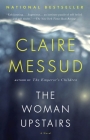
As these posts attest, I've been hung up on the "likability" issue for years, even before Claire Messud brought the issue to the fore in 2013. What Messud made spectacularly clear in the now-famous interview is that readers seem to judge female characters as "good" or "bad," depending on whether one would want to be friends with them. Male authors--and their male characters--aren't subject to the same norms. Men, in fiction if not in life, just have to be interesting.
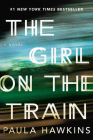
A more recent book, Paula Hawkins's The Girl on the Train, has a lot in common with Messud's The Woman Upstairs. And while the latter is classified as literary fiction, and the former a thriller, I think their similar titles tell us something. The main characters of these stories are "shadow women," existing in the periphery of society and of our notice. That's because they don't embody normal expectations at least for white, middle-class women: they've failed to become wives and mothers, as well as, to some degree or another, in their careers.
I would point out, however, that in both these stories, it's the first failure, to marry (or stay married) and produce children, that seems to pain both women more. Their envy of women who have achieved this status seems boundless, and produces rage and recklessness. And that's why both novels, to my mind, still subscribe to the conventional notion of the "likable" female character. Ultimately, they validate traditional notions of womanhood by showing how awful it is for women who have tried desperately, but can't manage to attain it. Ultimately I believe we're meant to pity these characters and be grateful that we've escaped their fate--assuming we either have or at least desire what they don't.
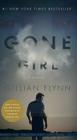
Mind you, I liked both these books quite a bit, especially Girl on the Train. But for an antidote to their conventional mores, I might recommend Gillian Flynn's Gone Girl, where the female protagonist is simply ragingly selfish and vengeful--but also intelligent and anything but passive.
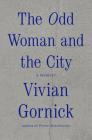
Or, if you don't think not craving kids and marriage automatically makes you a villain, try The Odd Woman and the City by Vivian Gornick--the real-life story of a woman who never really wanted either, and has lived quite a fulfilling life, thank you very much.
Shop Indie Bookstores
Shop Indie Bookstores
Shop Indie Bookstores
Shop Indie Bookstores
A more recent book, Paula Hawkins's The Girl on the Train, has a lot in common with Messud's The Woman Upstairs. And while the latter is classified as literary fiction, and the former a thriller, I think their similar titles tell us something. The main characters of these stories are "shadow women," existing in the periphery of society and of our notice. That's because they don't embody normal expectations at least for white, middle-class women: they've failed to become wives and mothers, as well as, to some degree or another, in their careers.
I would point out, however, that in both these stories, it's the first failure, to marry (or stay married) and produce children, that seems to pain both women more. Their envy of women who have achieved this status seems boundless, and produces rage and recklessness. And that's why both novels, to my mind, still subscribe to the conventional notion of the "likable" female character. Ultimately, they validate traditional notions of womanhood by showing how awful it is for women who have tried desperately, but can't manage to attain it. Ultimately I believe we're meant to pity these characters and be grateful that we've escaped their fate--assuming we either have or at least desire what they don't.
Mind you, I liked both these books quite a bit, especially Girl on the Train. But for an antidote to their conventional mores, I might recommend Gillian Flynn's Gone Girl, where the female protagonist is simply ragingly selfish and vengeful--but also intelligent and anything but passive.
Or, if you don't think not craving kids and marriage automatically makes you a villain, try The Odd Woman and the City by Vivian Gornick--the real-life story of a woman who never really wanted either, and has lived quite a fulfilling life, thank you very much.
Shop Indie Bookstores
Shop Indie Bookstores
Shop Indie Bookstores
Shop Indie Bookstores
Thursday, October 22, 2015
Understandings gleaned from heavy bouts of novel revision
What I think I've learned recently:
1. Making a character likable/relatable does not necessarily mean making readers feel sorry for her. This tactic often creates the opposite effect through sentimentality, overt authorial pleas for sympathy, general mushiness, doormat-ism, etc.
2. Evil is different from mean. Evil is interesting and requires intelligence. Mean is knee-jerk (h/t CZ).
3. If you are writing for publication, your book is not 100% yours.
4. Altruistic punishment (a.k.a. comeuppance) is something readers really want in fiction. Perhaps especially because it doesn't seem to happen that often in life.
5. I hate/love revising.
1. Making a character likable/relatable does not necessarily mean making readers feel sorry for her. This tactic often creates the opposite effect through sentimentality, overt authorial pleas for sympathy, general mushiness, doormat-ism, etc.
2. Evil is different from mean. Evil is interesting and requires intelligence. Mean is knee-jerk (h/t CZ).
3. If you are writing for publication, your book is not 100% yours.
4. Altruistic punishment (a.k.a. comeuppance) is something readers really want in fiction. Perhaps especially because it doesn't seem to happen that often in life.
5. I hate/love revising.
Wednesday, February 03, 2010
Again with the likability issue
Slate's Claire Dederer gives us the flip side to Monday's post on whether--and why--fictional characters should be likable. Reviewing Amy Bloom's Where the God of Love Hangs Out, Dederer delights in Bloom's ability to make readers love her characters. She goes so far as to make her review a primer on creating lovable characters, though she acknowledges she's not really doing justice to Bloom's gift.
First caveat: once again, I have not read the book being reviewed, only the review itself. I presume someone else has taken care of the blog post suggesting that those of us who read reviews instead of the actual books are foot soldiers in the army of the damned.
Second caveat: I am going to indulge an urge to speak somewhat sarcastically about this review. This sarcasm is simply not deserved. It's just that have issues about "liking" or "loving" characters, which probably speak to my own troubled psyche as much as anything. I taught an entire class on the reasons for, and advisability of, responding to literary characters as human beings. I just think it's weird. And I think we ought question the distinction, at least, and I'm interested in asking such questions through my own fiction. Yet, as a writer, I also want people to love my fiction, which, from all evidence, means making them care deeply about my characters. What does it take to do this? How much of my grumpy soul must I chop off and sell, in order to get with a program that's obvious to everyone else? These are burning questions for me. So anything that smacks of a "formula" for characterization just sets me off...even if that formula is helpful and correct, which I rather suspect Dederer's may be.
Anyway, here is my willfully nuance-free take on the formula for creating lovable characters:
1. Start with perfect human.
2. Add significant but understandable flaw (gout, mild alcoholism).
3. Refrain from judging character for this flaw, both via authorial voice and other characters. (Bonus if other characters are specifically attracted to the flaw.)
The more I think about this, the more I believe it *will* work. Consider: is this not the way most of us would strive to see the world? When we're being our best selves, don't we see (or want to see) people as basically good, with understandable flaws for which we do not pass judgment? So maybe reading Bloom gives us pleasure because she lets us be those best selves--people who give others the benefit of the doubt, who are intrigued or amused, rather than enraged, by people's faults. Books like hers give us practice in open-mindedness and forgiveness, and remind us of the pleasure such a worldview can bring. It's better to be this way. Gilead is Exhibit One for this theory.
So why do I fear the theory? Why won't I submit to its obvious truth and get on with it? I'll feel better. Writing will come easier. In fact, even as I grouse, I'm sifting through my novel for opportunities to make my characters more positive, their flaws less drastic.
Well, I'm worried about blandness, for one thing. I'm worried that all these lovable characters are all more or less alike, our reactions to them more or less the same (even if that reaction is the commendable one of loving). Moreover the fictional worlds they inhabit will have to be similar, in order to accommodate these particular kinds of creatures--the worlds are realistic, mostly comfortable, relatively safe. Again, maybe that's what reading fiction is all about. Surely some fiction can and should be about this. But all of it? Would something be lost if Fun with Problems vanished from the shelves?
I suppose one could push the boundaries of the formula to see if more interesting results ensue. Make the character ridiculously perfect, her flaw just on the border (or on the other side) of acceptable. Find some clever ways of passing judgment without forcing them upon the reader--because readers really don't like being told how they're supposed to think about characters.
First caveat: once again, I have not read the book being reviewed, only the review itself. I presume someone else has taken care of the blog post suggesting that those of us who read reviews instead of the actual books are foot soldiers in the army of the damned.
Second caveat: I am going to indulge an urge to speak somewhat sarcastically about this review. This sarcasm is simply not deserved. It's just that have issues about "liking" or "loving" characters, which probably speak to my own troubled psyche as much as anything. I taught an entire class on the reasons for, and advisability of, responding to literary characters as human beings. I just think it's weird. And I think we ought question the distinction, at least, and I'm interested in asking such questions through my own fiction. Yet, as a writer, I also want people to love my fiction, which, from all evidence, means making them care deeply about my characters. What does it take to do this? How much of my grumpy soul must I chop off and sell, in order to get with a program that's obvious to everyone else? These are burning questions for me. So anything that smacks of a "formula" for characterization just sets me off...even if that formula is helpful and correct, which I rather suspect Dederer's may be.
Anyway, here is my willfully nuance-free take on the formula for creating lovable characters:
1. Start with perfect human.
2. Add significant but understandable flaw (gout, mild alcoholism).
3. Refrain from judging character for this flaw, both via authorial voice and other characters. (Bonus if other characters are specifically attracted to the flaw.)
The more I think about this, the more I believe it *will* work. Consider: is this not the way most of us would strive to see the world? When we're being our best selves, don't we see (or want to see) people as basically good, with understandable flaws for which we do not pass judgment? So maybe reading Bloom gives us pleasure because she lets us be those best selves--people who give others the benefit of the doubt, who are intrigued or amused, rather than enraged, by people's faults. Books like hers give us practice in open-mindedness and forgiveness, and remind us of the pleasure such a worldview can bring. It's better to be this way. Gilead is Exhibit One for this theory.
So why do I fear the theory? Why won't I submit to its obvious truth and get on with it? I'll feel better. Writing will come easier. In fact, even as I grouse, I'm sifting through my novel for opportunities to make my characters more positive, their flaws less drastic.
Well, I'm worried about blandness, for one thing. I'm worried that all these lovable characters are all more or less alike, our reactions to them more or less the same (even if that reaction is the commendable one of loving). Moreover the fictional worlds they inhabit will have to be similar, in order to accommodate these particular kinds of creatures--the worlds are realistic, mostly comfortable, relatively safe. Again, maybe that's what reading fiction is all about. Surely some fiction can and should be about this. But all of it? Would something be lost if Fun with Problems vanished from the shelves?
I suppose one could push the boundaries of the formula to see if more interesting results ensue. Make the character ridiculously perfect, her flaw just on the border (or on the other side) of acceptable. Find some clever ways of passing judgment without forcing them upon the reader--because readers really don't like being told how they're supposed to think about characters.
Monday, June 14, 2010
Once more with compassion
I am reading Jonathan Lethem's Chronic City. Michiko Kakutani's review of this book prompted a rant from me awhile back, which I will now revisit, having a better idea now what I am talking about.
To recap: characters are not people (I ranted), and reviews that rate books based on the "likability" of the characters are...just...silly. But then I got hung up, as always, on exactly what it means when someone "likes" or "loves" a character, as opposed to, say, an actual person. And I did concede that opening oneself to feeling compassion or "mercy" for a character allows you to see more aspects of that character. I am coming more and more to that conclusion. In other words, as a fiction writer, I have developed a utilitarian view of compassion. It is worth trying to love your characters, but not because they are people or near-people, or because this somehow gives you practice in loving actual people. Rather, compassion demands that you notice details. If you are in a forgiving, open frame of mind, you naturally look for redeeming qualities even in the most villainous of villains. You also allow yourself to see foibles in your "good" characters, because you know these foibles don't make your characters worthless, but merely human. In other words, this openness in you, as the writer, makes your characters complex and interesting--likable because they are compelling, not because they are squeaky-clean good.
Now, about Chronic City. I can see why Kakutani found the long-winded Perkus and his acolytes frustrating. They do natter on. Basically the book (so far, I have not finished it yet) is mostly about going over to Perkus's apartment, getting stoned, and talking. There's also some sex, a loose tiger (apparently mechanical) tearing up the city, and an astronaut--the narrator's fiancee--stranded on a space station called Northern Lights.
Lethem is definitely taking some risks here. As reviewers other than Kakutani suggested, he intentionally--I believe--makes these conversations overly long and somewhat pointless; he also makes his narrator intentionally vague and distant, going so far as to name him Chase Insteadman. We are meant to understand, I think, that all this verbiage is a screen against powerful emotion, a way of diluting it, and also a way of life for a great many people. There's a reason the astronaut's letters back to earth contain the most emotion-laden language in the book. Dying of cancer and stranded, she is emotion, in some sense. And perhaps it is not all bad that she is far away. It is not at all clear, at least thus far, that "getting in touch" with their emotions would help any of these people, or the book itself.
The question this book raises for me, because it has direct relevance to my own work, is how realistic can characters be when their milieu is partly unrealistic? Like the characters in DeLillo's White Noise, the people in Chronic City are a little abstract. They are largely composed of their own voices, appearing only as their points of view in conversations. They represent positions. This is not to say that one cannot feel for them. But perhaps they are spread a little thin, as it were, to accommodate the wider boundaries of their world--a world in which a tunneling tiger destroys city blocks routinely, in which there are more frequent hints of magic, both good and bad, than in our own. Could you successfully create less abstract, more human characters and still have them inhabit such a world?
My suspicion (and worry) is, perhaps not. I tend to think we are very much products of our environments. So we can't quite know what a product of an environment that does not, and cannot, actually exist would be like. In this case it might make more sense to have the characters float above that world somewhat, commenting on it from some distance rather than thrashing around inside it. Because in the latter case, your real characters start to make your unreal world look like a contrivance.

Shop Indie Bookstores
To recap: characters are not people (I ranted), and reviews that rate books based on the "likability" of the characters are...just...silly. But then I got hung up, as always, on exactly what it means when someone "likes" or "loves" a character, as opposed to, say, an actual person. And I did concede that opening oneself to feeling compassion or "mercy" for a character allows you to see more aspects of that character. I am coming more and more to that conclusion. In other words, as a fiction writer, I have developed a utilitarian view of compassion. It is worth trying to love your characters, but not because they are people or near-people, or because this somehow gives you practice in loving actual people. Rather, compassion demands that you notice details. If you are in a forgiving, open frame of mind, you naturally look for redeeming qualities even in the most villainous of villains. You also allow yourself to see foibles in your "good" characters, because you know these foibles don't make your characters worthless, but merely human. In other words, this openness in you, as the writer, makes your characters complex and interesting--likable because they are compelling, not because they are squeaky-clean good.
Now, about Chronic City. I can see why Kakutani found the long-winded Perkus and his acolytes frustrating. They do natter on. Basically the book (so far, I have not finished it yet) is mostly about going over to Perkus's apartment, getting stoned, and talking. There's also some sex, a loose tiger (apparently mechanical) tearing up the city, and an astronaut--the narrator's fiancee--stranded on a space station called Northern Lights.
Lethem is definitely taking some risks here. As reviewers other than Kakutani suggested, he intentionally--I believe--makes these conversations overly long and somewhat pointless; he also makes his narrator intentionally vague and distant, going so far as to name him Chase Insteadman. We are meant to understand, I think, that all this verbiage is a screen against powerful emotion, a way of diluting it, and also a way of life for a great many people. There's a reason the astronaut's letters back to earth contain the most emotion-laden language in the book. Dying of cancer and stranded, she is emotion, in some sense. And perhaps it is not all bad that she is far away. It is not at all clear, at least thus far, that "getting in touch" with their emotions would help any of these people, or the book itself.
The question this book raises for me, because it has direct relevance to my own work, is how realistic can characters be when their milieu is partly unrealistic? Like the characters in DeLillo's White Noise, the people in Chronic City are a little abstract. They are largely composed of their own voices, appearing only as their points of view in conversations. They represent positions. This is not to say that one cannot feel for them. But perhaps they are spread a little thin, as it were, to accommodate the wider boundaries of their world--a world in which a tunneling tiger destroys city blocks routinely, in which there are more frequent hints of magic, both good and bad, than in our own. Could you successfully create less abstract, more human characters and still have them inhabit such a world?
My suspicion (and worry) is, perhaps not. I tend to think we are very much products of our environments. So we can't quite know what a product of an environment that does not, and cannot, actually exist would be like. In this case it might make more sense to have the characters float above that world somewhat, commenting on it from some distance rather than thrashing around inside it. Because in the latter case, your real characters start to make your unreal world look like a contrivance.
Shop Indie Bookstores
Thursday, August 18, 2011
In praise of unlikable characters: Pete Campbell
So I blew through the fourth season of Mad Men on Netflix, and made a surprising discovery: Pete Campbell is my favorite character.
This discovery interests me because I have been harping off and on about the issue of likable characters in fiction. In fact I created a class around the topic at Stanford a few years ago. To recap, it always bugged me in fiction workshops when people would say something to the effect of, "I just don't like this character," meaning...well, I wasn't sure, exactly. The story wasn't working for these people, but was it because they felt the character was immoral? Or they couldn't "relate" to the character, meaning he/she didn't evoke sympathy in the reader? Do all characters have to be someone we would want to be friends with in real life? I thought not. But characters to have to engage us, and I have been at pains over the years to figure out how.
In the first few seasons of Mad Men, Pete was the character I loved to hate. I hated his pinched expression, his sense of entitlement, and his peevishness when that sense ran up against some real-world obstacle. (Also he was a jerk to Peggy, and his wife, and all women, but that of course doesn't make him anything special in the MM world.) He was like a little boy entering the grown-up world a little too soon, and finding out that it was not at all what he'd expected.
But who can't relate to that? Who hasn't felt, after a long day at some office, that "I was led to believe there would be cake" feeling, and wanting to whine about it? Where is the damn cake? And the freedom, and the knowledge, and the power that all adults were supposed to have, all of which I was supposed to have, too, once I grew up? It's all a big ruse, this adult thing? Now what am I supposed to do?
Also in this past season, I've noticed another quality in Pete that I admire: his commitment. Even as he sees (and complains about) the Don Drapers of the world trampling on the less handsome and less lucky and (so far) getting away with it, he still puts on his suit and shows up at work and does his god-damnedest to haul in new clients. We may not think much of the value of the work he does, but he does it extremely well. Despite all the problems he sees, Pete is not yet ready to give up on his dream. He signed up to be an ad man, and that's what he's going to do.
Lots of credit, of course, must go to the actor, Vincent Kartheiser, who plays Pete without a trace of vanity. He never winks at the audience, inviting us to mock Pete or to remind us that he isn't "really" this guy. The commitment we sense in Pete is the actor's commitment.
So what does this all mean for writers trying to create interesting characters? By which I mean, characters who are complex and engaging and challenging--not simply mirrors held up to flatter readers' (and our own) moral vanity? Well, the creator of characters must understand them. I may not like or admire Pete's peevishness, but I know where it comes from; I've felt it, too. In other words, Pete feels like a creation from within. He's not a cartoon, observed and imitated from outside, but grown out of common, if embarrassing, emotions.
All of which suggests that a great character might start out as some complex twinge in the heart, rather than as an image, or a type, or a role you need played in your story. And you need to commit to that twinge, not wish it away, or wink at it.
This discovery interests me because I have been harping off and on about the issue of likable characters in fiction. In fact I created a class around the topic at Stanford a few years ago. To recap, it always bugged me in fiction workshops when people would say something to the effect of, "I just don't like this character," meaning...well, I wasn't sure, exactly. The story wasn't working for these people, but was it because they felt the character was immoral? Or they couldn't "relate" to the character, meaning he/she didn't evoke sympathy in the reader? Do all characters have to be someone we would want to be friends with in real life? I thought not. But characters to have to engage us, and I have been at pains over the years to figure out how.
In the first few seasons of Mad Men, Pete was the character I loved to hate. I hated his pinched expression, his sense of entitlement, and his peevishness when that sense ran up against some real-world obstacle. (Also he was a jerk to Peggy, and his wife, and all women, but that of course doesn't make him anything special in the MM world.) He was like a little boy entering the grown-up world a little too soon, and finding out that it was not at all what he'd expected.
But who can't relate to that? Who hasn't felt, after a long day at some office, that "I was led to believe there would be cake" feeling, and wanting to whine about it? Where is the damn cake? And the freedom, and the knowledge, and the power that all adults were supposed to have, all of which I was supposed to have, too, once I grew up? It's all a big ruse, this adult thing? Now what am I supposed to do?
Also in this past season, I've noticed another quality in Pete that I admire: his commitment. Even as he sees (and complains about) the Don Drapers of the world trampling on the less handsome and less lucky and (so far) getting away with it, he still puts on his suit and shows up at work and does his god-damnedest to haul in new clients. We may not think much of the value of the work he does, but he does it extremely well. Despite all the problems he sees, Pete is not yet ready to give up on his dream. He signed up to be an ad man, and that's what he's going to do.
Lots of credit, of course, must go to the actor, Vincent Kartheiser, who plays Pete without a trace of vanity. He never winks at the audience, inviting us to mock Pete or to remind us that he isn't "really" this guy. The commitment we sense in Pete is the actor's commitment.
So what does this all mean for writers trying to create interesting characters? By which I mean, characters who are complex and engaging and challenging--not simply mirrors held up to flatter readers' (and our own) moral vanity? Well, the creator of characters must understand them. I may not like or admire Pete's peevishness, but I know where it comes from; I've felt it, too. In other words, Pete feels like a creation from within. He's not a cartoon, observed and imitated from outside, but grown out of common, if embarrassing, emotions.
All of which suggests that a great character might start out as some complex twinge in the heart, rather than as an image, or a type, or a role you need played in your story. And you need to commit to that twinge, not wish it away, or wink at it.
Monday, February 01, 2010
More Fun with Problems
I have not read Robert Stone's new story collection, Fun with Problems, which Antonya Nelson reviewed in yesterday's NYTBR. However I am heartened and intrigued by Nelson's review, particularly the last paragraph:
Yes, I'm harping on the "likability" issue again, only this time, I have allies! (Or at least I have an ally in Nelson--I can't say at this point what Stone may be up to.) To recap: I have often wondered about, and been peeved by, the "likable characters=good writing" equation that seems to go unquestioned in book reviews and writing workshops. Critics are wont to dismiss books out of hand for having unlikable characters--regardless of whether those characters are realistic, and / or well-drawn. Witness, for instance, Michiko Kakutani on Jonathan Lethem's Chronic City, which I ranted about here. Also--unsurprisingly--she doesn't like Fun with Problems either:
The view that morally bad=artistically bad also faintly implies that an author's characters reflect on his own moral character. An author who won't give us the "good" characters we seek perhaps harbors some moral failings of his own. At the very least, Kakutani suggests, authors owe characters and readers some kind of redemption--or "whiff of love and salvation" as she puts it. The failure to offer redemption is both an artistic and moral one (by the author as false messiah? How dare he promise us salvation and not deliver!). Also, Kakutani's assumption seems to be that all lives follow this redemptive arc; so not showing it results in a portrait that's either unrealistic, or else not worth the reader's engagement.
Nelson turns these assumptions inside out by suggesting that characters function as narcissistic mirrors for readers. Because we identify with fictional characters--especially, perhaps, if they are well drawn--we want them to be good, or else redeemed from their ultimately illusory badness (show us the arc!). Otherwise, it seems the author is telling us that we are bad. That we cannot be redeemed--at least, not by this author, in this story. Unredeemed characters keep us from using fiction as a mirror of Narcissus, which may be the reason a great many people read in the first place. In Nelson's view, Stone's collection is more like the Queen's mirror in Snow White, which tells us, to our shock, that we aren't the fairest of all. Grown-ups can handle that information. (The Queen was most certainly not a grown-up; come to think of it, she's like tea-partiers who can't stand hearing any, any criticism of America, especially the kind that suggests other countries maybe do one or two things better than we do. America is their fiction, their mirror of Narcissus.)
Of course, this brings up the larger question of why we read fiction at all. If we read for pleasure, then surely seeing ourselves as good is more pleasurable than what Stone seems to offer. Or, to put it another way, fictional pleasure depends on this arc of redemption. If we don't see our better angels in literary characters, we're no longer experiencing the pleasure of fiction per se, but undergoing something else--a highfalutin scolding, perhaps. I will go on record as saying I like redemption in general, and hope, and being told I'm good. I'm not sure I want to read Fun with Problems. But I'd also like to think that I'm not reading fiction for pats on the head, or that I consider the failure to bolster my ego sufficient reason to call a book bad.
Reading guides sometimes encourage us to diagnose the faults of characters who display their “unlikability,” as if diagnosis might helpfully lead to dismissal. It’s true you might resist wanting to know the people in “Fun With Problems” or, maybe more tellingly, seeing yourself in them. You might turn away from the uncomfortable truths you don’t wish to receive, from the mature, dissolute, ultimately heartbreaking rites of passage that fill these pages. But a genuine coming-of-age story demands that its subject resist the experience. No book is for everyone, but some books can be fully taken in only when the reader is ready. “Fun With Problems” is a book for grown-ups, for people prepared to absorb the news of the world that it announces, for people both grateful and a little uneasy in finding a writer brave enough to be the bearer.
Yes, I'm harping on the "likability" issue again, only this time, I have allies! (Or at least I have an ally in Nelson--I can't say at this point what Stone may be up to.) To recap: I have often wondered about, and been peeved by, the "likable characters=good writing" equation that seems to go unquestioned in book reviews and writing workshops. Critics are wont to dismiss books out of hand for having unlikable characters--regardless of whether those characters are realistic, and / or well-drawn. Witness, for instance, Michiko Kakutani on Jonathan Lethem's Chronic City, which I ranted about here. Also--unsurprisingly--she doesn't like Fun with Problems either:
Similar cynics populate Mr. Stone’s novels, of course, but in the most persuasive of those books, he not only maps the sources of his heroes’ malaise and the fallout it has on their lives but also dramatizes their flailing efforts to grab after one last chance at a big score or even a whiff of love and salvation. In the stories in this volume we are not given the full arc of his people’s lives; we get only snapshots of their drunken nihilism and puerile self-pity. It’s certainly not enough to make us care, not even enough to engage our voyeuristic curiosity; it’s simply dismal and depressing.
The view that morally bad=artistically bad also faintly implies that an author's characters reflect on his own moral character. An author who won't give us the "good" characters we seek perhaps harbors some moral failings of his own. At the very least, Kakutani suggests, authors owe characters and readers some kind of redemption--or "whiff of love and salvation" as she puts it. The failure to offer redemption is both an artistic and moral one (by the author as false messiah? How dare he promise us salvation and not deliver!). Also, Kakutani's assumption seems to be that all lives follow this redemptive arc; so not showing it results in a portrait that's either unrealistic, or else not worth the reader's engagement.
Nelson turns these assumptions inside out by suggesting that characters function as narcissistic mirrors for readers. Because we identify with fictional characters--especially, perhaps, if they are well drawn--we want them to be good, or else redeemed from their ultimately illusory badness (show us the arc!). Otherwise, it seems the author is telling us that we are bad. That we cannot be redeemed--at least, not by this author, in this story. Unredeemed characters keep us from using fiction as a mirror of Narcissus, which may be the reason a great many people read in the first place. In Nelson's view, Stone's collection is more like the Queen's mirror in Snow White, which tells us, to our shock, that we aren't the fairest of all. Grown-ups can handle that information. (The Queen was most certainly not a grown-up; come to think of it, she's like tea-partiers who can't stand hearing any, any criticism of America, especially the kind that suggests other countries maybe do one or two things better than we do. America is their fiction, their mirror of Narcissus.)
Of course, this brings up the larger question of why we read fiction at all. If we read for pleasure, then surely seeing ourselves as good is more pleasurable than what Stone seems to offer. Or, to put it another way, fictional pleasure depends on this arc of redemption. If we don't see our better angels in literary characters, we're no longer experiencing the pleasure of fiction per se, but undergoing something else--a highfalutin scolding, perhaps. I will go on record as saying I like redemption in general, and hope, and being told I'm good. I'm not sure I want to read Fun with Problems. But I'd also like to think that I'm not reading fiction for pats on the head, or that I consider the failure to bolster my ego sufficient reason to call a book bad.
Tuesday, May 06, 2014
Must unconventional female characters be punished?
So I just finished reading Penelope Lively's Moon Tiger. I almost didn't buy it because of this cover:

Shop Indie Bookstores
Someday I will write a screed about literalism and book covers, but, OK, it was the 80s. And Moon Tiger won the 1987 Booker Prize, which struck me as a good sign.
Still, when reading the back cover copy, I had my doubts: if this was "the life of a strong, independent woman, with its often contentious relations with family and friends," was I in for a tale of this woman's eventual comeuppance? As Claudia Hampton "lies alone in a London hospital bed," reviewing her life, will she come to regret her choices--her aloneness, above all, showing how wrong she has been?
[SPOILER]
No. And, therefore, yay!
Claudia, a best-selling history writer, worked as a war correspondent in Egypt during World War II, where she met the love of her life and, soon enough, lost him. And while this love affair is presented as the heart of the story, and of Claudia's life, it doesn't represent Claudia's one chance to settle down and have the normal life she secretly wanted--it wasn't, and she didn't. Her loss doesn't impede her from going on to a successful career, despite the obstacles that stopped less determined--and less abrasive--women at that time. The affair ultimately is no more and no less than heartbreak, which all of us, conventional or not, will experience at some point in this life.
Claudia does have a child with another man, whom she never marries. But motherhood doesn't change her. She doesn't find it, or her daughter, Lisa, very interesting--and here's where I think Lively does an especially good job of criticizing without condemning or pitying. The story is told from multiple points of view, so we sense the daughter's pain as her mother once again brusquely dismisses her. But we are also discouraged from making easy judgments. We come to understand that these two are simply made of different stuff, and they're doing the best they can under those circumstances. Lisa craves convention as much as Claudia loathes it. Perhaps Lisa's conformity is her rebellion against her mother, much as nonconformists rebel against their straight-laced families, but no matter. As the novel unfolds, we see both of them accepting their own and each other's limitations, while not being exactly happy about them.
And in the end Claudia [SPOILER] does die alone. But this is not a punishment or comeuppance, but, as I read it, a kind of triumph. Lively suggests that aloneness can be beautiful and satisfying--at any rate, no more imperfect than "proper" family life.
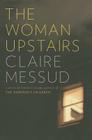
This is where Moon Tiger departs from another, more recent story with a non-conforming female protagonist, Claire Messud's The Woman Upstairs. This book sparked a much-needed conversation about "likable" female characters; in a now famous interview, Messud sharply pointed out that "likability" is an absurd, sexist, and shallow demand that male authors and characters don't have to contend with. Still, I read The Woman Upstairs as ultimately supporting traditional definitions of female success. Nora defies conventions for female protagonists, but not convention itself: she is angry because she hasn't been able to get married and have kids and succeed as an artist by her early forties. Lively, in contrast, allows her protagonist to suffer the downsides of defiance while still showing that defiance was worth it.
I don't mean to suggest that novels should have a particular political agenda, or that Moon Tiger is "better" than The Woman Upstairs because the former is more radical. But I do think that more books like Moon Tiger would be good for us all.
Shop Indie Bookstores
Shop Indie Bookstores
Someday I will write a screed about literalism and book covers, but, OK, it was the 80s. And Moon Tiger won the 1987 Booker Prize, which struck me as a good sign.
Still, when reading the back cover copy, I had my doubts: if this was "the life of a strong, independent woman, with its often contentious relations with family and friends," was I in for a tale of this woman's eventual comeuppance? As Claudia Hampton "lies alone in a London hospital bed," reviewing her life, will she come to regret her choices--her aloneness, above all, showing how wrong she has been?
[SPOILER]
No. And, therefore, yay!
Claudia, a best-selling history writer, worked as a war correspondent in Egypt during World War II, where she met the love of her life and, soon enough, lost him. And while this love affair is presented as the heart of the story, and of Claudia's life, it doesn't represent Claudia's one chance to settle down and have the normal life she secretly wanted--it wasn't, and she didn't. Her loss doesn't impede her from going on to a successful career, despite the obstacles that stopped less determined--and less abrasive--women at that time. The affair ultimately is no more and no less than heartbreak, which all of us, conventional or not, will experience at some point in this life.
Claudia does have a child with another man, whom she never marries. But motherhood doesn't change her. She doesn't find it, or her daughter, Lisa, very interesting--and here's where I think Lively does an especially good job of criticizing without condemning or pitying. The story is told from multiple points of view, so we sense the daughter's pain as her mother once again brusquely dismisses her. But we are also discouraged from making easy judgments. We come to understand that these two are simply made of different stuff, and they're doing the best they can under those circumstances. Lisa craves convention as much as Claudia loathes it. Perhaps Lisa's conformity is her rebellion against her mother, much as nonconformists rebel against their straight-laced families, but no matter. As the novel unfolds, we see both of them accepting their own and each other's limitations, while not being exactly happy about them.
And in the end Claudia [SPOILER] does die alone. But this is not a punishment or comeuppance, but, as I read it, a kind of triumph. Lively suggests that aloneness can be beautiful and satisfying--at any rate, no more imperfect than "proper" family life.
This is where Moon Tiger departs from another, more recent story with a non-conforming female protagonist, Claire Messud's The Woman Upstairs. This book sparked a much-needed conversation about "likable" female characters; in a now famous interview, Messud sharply pointed out that "likability" is an absurd, sexist, and shallow demand that male authors and characters don't have to contend with. Still, I read The Woman Upstairs as ultimately supporting traditional definitions of female success. Nora defies conventions for female protagonists, but not convention itself: she is angry because she hasn't been able to get married and have kids and succeed as an artist by her early forties. Lively, in contrast, allows her protagonist to suffer the downsides of defiance while still showing that defiance was worth it.
I don't mean to suggest that novels should have a particular political agenda, or that Moon Tiger is "better" than The Woman Upstairs because the former is more radical. But I do think that more books like Moon Tiger would be good for us all.
Shop Indie Bookstores
Subscribe to:
Posts (Atom)