In their salute to Russian literature yesterday, the NYT Book Review asked their Bookends writers the fascinating but awkwardly worded question, "What Makes the Russian Literature of the 19th Century So Distinctive?" About Dostoevsky, my personal fave, Francine Prose writes, "Dostoyevsky’s people seem real to us, vivid and fully present, even as we suspect that no one ever really behaved as they do, flinging themselves at each other’s feet, telling their life stories at extraordinary length and in excruciating detail to a stranger in a bar."
I still like the explanation that apparently comes from one of Dostoevsky's own characters in A Raw Youth, a book I have never read. This character says that he "feels ideas," a condition that applies to many of Dostoevsky's people--at least to the men (the women seem to just plain feel). It's true that in real life, we rarely see people driving themselves to actual madness over what God really wants from us, or why there is evil, or how we can contribute the most to humanity during our short time on earth. But maybe they should.
Such characters also inhabit Iris Murdoch's novels, which is probably why I've gone a bit nuts for her, too. What I love about these characters is that they deeply care about ideas, about morality, about thinking and meaning. Ideas and morality aren't abstract concepts that one contemplates instead of living. For these people, thinking is living. That probably seems rather foreign, in an American context particularly; but in these novels, ideas are life blood. Thinking makes us more human, and more alive--not less so.
Showing posts with label literature. Show all posts
Showing posts with label literature. Show all posts
Monday, December 01, 2014


Tuesday, May 06, 2014
Must unconventional female characters be punished?
So I just finished reading Penelope Lively's Moon Tiger. I almost didn't buy it because of this cover:

Shop Indie Bookstores
Someday I will write a screed about literalism and book covers, but, OK, it was the 80s. And Moon Tiger won the 1987 Booker Prize, which struck me as a good sign.
Still, when reading the back cover copy, I had my doubts: if this was "the life of a strong, independent woman, with its often contentious relations with family and friends," was I in for a tale of this woman's eventual comeuppance? As Claudia Hampton "lies alone in a London hospital bed," reviewing her life, will she come to regret her choices--her aloneness, above all, showing how wrong she has been?
[SPOILER]
No. And, therefore, yay!
Claudia, a best-selling history writer, worked as a war correspondent in Egypt during World War II, where she met the love of her life and, soon enough, lost him. And while this love affair is presented as the heart of the story, and of Claudia's life, it doesn't represent Claudia's one chance to settle down and have the normal life she secretly wanted--it wasn't, and she didn't. Her loss doesn't impede her from going on to a successful career, despite the obstacles that stopped less determined--and less abrasive--women at that time. The affair ultimately is no more and no less than heartbreak, which all of us, conventional or not, will experience at some point in this life.
Claudia does have a child with another man, whom she never marries. But motherhood doesn't change her. She doesn't find it, or her daughter, Lisa, very interesting--and here's where I think Lively does an especially good job of criticizing without condemning or pitying. The story is told from multiple points of view, so we sense the daughter's pain as her mother once again brusquely dismisses her. But we are also discouraged from making easy judgments. We come to understand that these two are simply made of different stuff, and they're doing the best they can under those circumstances. Lisa craves convention as much as Claudia loathes it. Perhaps Lisa's conformity is her rebellion against her mother, much as nonconformists rebel against their straight-laced families, but no matter. As the novel unfolds, we see both of them accepting their own and each other's limitations, while not being exactly happy about them.
And in the end Claudia [SPOILER] does die alone. But this is not a punishment or comeuppance, but, as I read it, a kind of triumph. Lively suggests that aloneness can be beautiful and satisfying--at any rate, no more imperfect than "proper" family life.
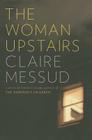
This is where Moon Tiger departs from another, more recent story with a non-conforming female protagonist, Claire Messud's The Woman Upstairs. This book sparked a much-needed conversation about "likable" female characters; in a now famous interview, Messud sharply pointed out that "likability" is an absurd, sexist, and shallow demand that male authors and characters don't have to contend with. Still, I read The Woman Upstairs as ultimately supporting traditional definitions of female success. Nora defies conventions for female protagonists, but not convention itself: she is angry because she hasn't been able to get married and have kids and succeed as an artist by her early forties. Lively, in contrast, allows her protagonist to suffer the downsides of defiance while still showing that defiance was worth it.
I don't mean to suggest that novels should have a particular political agenda, or that Moon Tiger is "better" than The Woman Upstairs because the former is more radical. But I do think that more books like Moon Tiger would be good for us all.
Shop Indie Bookstores
Shop Indie Bookstores
Someday I will write a screed about literalism and book covers, but, OK, it was the 80s. And Moon Tiger won the 1987 Booker Prize, which struck me as a good sign.
Still, when reading the back cover copy, I had my doubts: if this was "the life of a strong, independent woman, with its often contentious relations with family and friends," was I in for a tale of this woman's eventual comeuppance? As Claudia Hampton "lies alone in a London hospital bed," reviewing her life, will she come to regret her choices--her aloneness, above all, showing how wrong she has been?
[SPOILER]
No. And, therefore, yay!
Claudia, a best-selling history writer, worked as a war correspondent in Egypt during World War II, where she met the love of her life and, soon enough, lost him. And while this love affair is presented as the heart of the story, and of Claudia's life, it doesn't represent Claudia's one chance to settle down and have the normal life she secretly wanted--it wasn't, and she didn't. Her loss doesn't impede her from going on to a successful career, despite the obstacles that stopped less determined--and less abrasive--women at that time. The affair ultimately is no more and no less than heartbreak, which all of us, conventional or not, will experience at some point in this life.
Claudia does have a child with another man, whom she never marries. But motherhood doesn't change her. She doesn't find it, or her daughter, Lisa, very interesting--and here's where I think Lively does an especially good job of criticizing without condemning or pitying. The story is told from multiple points of view, so we sense the daughter's pain as her mother once again brusquely dismisses her. But we are also discouraged from making easy judgments. We come to understand that these two are simply made of different stuff, and they're doing the best they can under those circumstances. Lisa craves convention as much as Claudia loathes it. Perhaps Lisa's conformity is her rebellion against her mother, much as nonconformists rebel against their straight-laced families, but no matter. As the novel unfolds, we see both of them accepting their own and each other's limitations, while not being exactly happy about them.
And in the end Claudia [SPOILER] does die alone. But this is not a punishment or comeuppance, but, as I read it, a kind of triumph. Lively suggests that aloneness can be beautiful and satisfying--at any rate, no more imperfect than "proper" family life.
This is where Moon Tiger departs from another, more recent story with a non-conforming female protagonist, Claire Messud's The Woman Upstairs. This book sparked a much-needed conversation about "likable" female characters; in a now famous interview, Messud sharply pointed out that "likability" is an absurd, sexist, and shallow demand that male authors and characters don't have to contend with. Still, I read The Woman Upstairs as ultimately supporting traditional definitions of female success. Nora defies conventions for female protagonists, but not convention itself: she is angry because she hasn't been able to get married and have kids and succeed as an artist by her early forties. Lively, in contrast, allows her protagonist to suffer the downsides of defiance while still showing that defiance was worth it.
I don't mean to suggest that novels should have a particular political agenda, or that Moon Tiger is "better" than The Woman Upstairs because the former is more radical. But I do think that more books like Moon Tiger would be good for us all.
Shop Indie Bookstores
Tuesday, April 15, 2014
No Idea of Order at Key West
In my sudden zeal to relive the heady days as an undergraduate English major, I came across this relic in my Norton Anthology:


Here we see a long-ago incarnation of yours truly, taking notes on Wallace Stevens's "The Idea of Order at Key West," most likely in Intro to Poetry, circa 1985. It's clear from the flat, dutiful quality of these notes that I was recording my professor's statements as he walked us through the poem. That is to say, I had literally no idea what he, or Stevens, was talking about. The interpretation of the poem was as incomprehensible to me as the poem itself. Yes, this is auditory. Yes, this is conditional. This is spiritual language. So what? I didn't understand how any of these concepts elucidated the poem, or vice versa. Thanks in part to the New Critical practices my teachers were steeped in at the time, the whole discussion became an echo chamber of abstractions.
The final proof of how lost I was lies in the title of the next poem, "The Poems of Our Climate," where you see my younger self filling in the o's. Now, I was not normally one to engage in this activity. In fact, I recall thinking at various times in my youth that filling in o's and p's and e's in printed text was a sure sign of idiocy. Yet here I am, not only doing that very thing, but carefully shading the o's for a 3-D effect. I had completely thrown in the towel on Stevens.
Rereading the poem now, I find both more and less here than these notes suggest. I'm certainly less intimidated by it, and can sort of relate to it without being able to articulate exactly what it's "about." And that's probably because I simply have much more experience, with poetry and with life. Also I don't have to write a paper about this, which reduces the anxiety level considerably; but if I did have to write one, I would likely spend a lot more time on the poem's aesthetic qualities, and how they create an experience that doesn't necessarily represent anything beyond itself. That is, poetry happens within the poem. It is not always, or at least not solely, a pointer.
With this hindsight, it seems critical that anyone teaching such poems in high school and college remember how increasingly distant our young charges' experiences and concerns are from those of a middle-aged white poet in 1935. How might we bridge the gap?
I think we could start with the advice Dean Bakopoulos gives in this marvelous piece from the NYT. Before even beginning to wrestle with a story or poem's "meaning," whatever we're trying to get at with that, first let students select sentences or phrases or words that move them. They don't have to know why these words speak to them, only that they do on some level other than pure logic. They might like the words, in fact, because they're confusing. They present a new, unfamiliar experience.
After a while, you might begin to introduce some context, like Stevens's particular interests and concerns, and some general concerns of his time and place and class and culture. How is this individual mind interacting with external ideas and questions, as well as with physical places and experiences like hearing and seeing and feeling?
I frankly have little experience teaching poetry, and find more experimental pieces much harder to deal with than this one. But it does behoove us, when we teach, to try to put ourselves in our students' shoes, remembering how little we knew, back in the day, about the lives of those to whom this poem speaks more readily.
Here we see a long-ago incarnation of yours truly, taking notes on Wallace Stevens's "The Idea of Order at Key West," most likely in Intro to Poetry, circa 1985. It's clear from the flat, dutiful quality of these notes that I was recording my professor's statements as he walked us through the poem. That is to say, I had literally no idea what he, or Stevens, was talking about. The interpretation of the poem was as incomprehensible to me as the poem itself. Yes, this is auditory. Yes, this is conditional. This is spiritual language. So what? I didn't understand how any of these concepts elucidated the poem, or vice versa. Thanks in part to the New Critical practices my teachers were steeped in at the time, the whole discussion became an echo chamber of abstractions.
The final proof of how lost I was lies in the title of the next poem, "The Poems of Our Climate," where you see my younger self filling in the o's. Now, I was not normally one to engage in this activity. In fact, I recall thinking at various times in my youth that filling in o's and p's and e's in printed text was a sure sign of idiocy. Yet here I am, not only doing that very thing, but carefully shading the o's for a 3-D effect. I had completely thrown in the towel on Stevens.
Rereading the poem now, I find both more and less here than these notes suggest. I'm certainly less intimidated by it, and can sort of relate to it without being able to articulate exactly what it's "about." And that's probably because I simply have much more experience, with poetry and with life. Also I don't have to write a paper about this, which reduces the anxiety level considerably; but if I did have to write one, I would likely spend a lot more time on the poem's aesthetic qualities, and how they create an experience that doesn't necessarily represent anything beyond itself. That is, poetry happens within the poem. It is not always, or at least not solely, a pointer.
With this hindsight, it seems critical that anyone teaching such poems in high school and college remember how increasingly distant our young charges' experiences and concerns are from those of a middle-aged white poet in 1935. How might we bridge the gap?
I think we could start with the advice Dean Bakopoulos gives in this marvelous piece from the NYT. Before even beginning to wrestle with a story or poem's "meaning," whatever we're trying to get at with that, first let students select sentences or phrases or words that move them. They don't have to know why these words speak to them, only that they do on some level other than pure logic. They might like the words, in fact, because they're confusing. They present a new, unfamiliar experience.
After a while, you might begin to introduce some context, like Stevens's particular interests and concerns, and some general concerns of his time and place and class and culture. How is this individual mind interacting with external ideas and questions, as well as with physical places and experiences like hearing and seeing and feeling?
I frankly have little experience teaching poetry, and find more experimental pieces much harder to deal with than this one. But it does behoove us, when we teach, to try to put ourselves in our students' shoes, remembering how little we knew, back in the day, about the lives of those to whom this poem speaks more readily.
Monday, January 27, 2014
An author I will keep reading till I decide if I like his writing
Because of my now almost year-long obsession with Iris Murdoch, whenever I go into a bookstore, I head straight for the M's. A few months ago, at my favorite used bookstore, while staring disappointedly at the space that should have contained several Murdoch novels, but didn't, I discovered a novel called Hopeful Monsters by Nicholas Mosely. I knew nothing about him, including that he is the son of renowned British fascist Oswald Mosley ... but of course I am going to pick up any book called "Hopeful Monsters" that promises to be a "pyrotechnically accomplished novel of ideas, in which communism, psychoanalytic theory, uncertainty, and relativity obtain visceral emotional force," according to the book jacket.
I liked it. I think. It contained extraordinary, stunning images, including an unforgettable extended scene of a small child being rolled down a hill in a tire. But overall, the book managed to be both fascinating and oddly distancing. Perhaps it suffered from that common criticism aimed at all "novels of ideas," whatever those are: that they are bloodless, that readers really want novels "about character" (as if that's somehow opposed to "ideas"). Yet what if your characters themselves live lives of the mind? What if their greatest passion in life is ideas, the search for the truth about the universe?
Anyway, I couldn't decide if I liked the book or not, so I got another one, The Hesperides Tree, which I'm reading now. Here's a sample passage:

This section contains a couple of the distinctive, sometimes baffling quirks of Mosley's style. That "I thought -- " appears at least once on nearly every page of both novels, and it has the effect, for me, of kicking me out of the narrative. A cardinal sin, as any writing workshop will gleefully inform you. But that effect has to be intentional. These characters, themselves, have the habit of stepping back, even in the middle of very intense experiences, and reflecting on what the events mean. They, like us, are in and out of their own stories at the same time. Mosley also likes repetition, as here, with the vaguely hypnotic recurrence of "wildlife station." Again, you end up paying attention to the language as much as to what the language conveys--which lends the whole story an edge of unreality.
It's not that the story becomes less compelling because of these techniques; what's compelling is the telling of the story. Which is why we don't get to pretend that we're seeing straight through the words into some alternate but completely believable world, populated by people just like us. The story is the story. And that makes for a different but still deeply intriguing reading experience.
I liked it. I think. It contained extraordinary, stunning images, including an unforgettable extended scene of a small child being rolled down a hill in a tire. But overall, the book managed to be both fascinating and oddly distancing. Perhaps it suffered from that common criticism aimed at all "novels of ideas," whatever those are: that they are bloodless, that readers really want novels "about character" (as if that's somehow opposed to "ideas"). Yet what if your characters themselves live lives of the mind? What if their greatest passion in life is ideas, the search for the truth about the universe?
Anyway, I couldn't decide if I liked the book or not, so I got another one, The Hesperides Tree, which I'm reading now. Here's a sample passage:
This section contains a couple of the distinctive, sometimes baffling quirks of Mosley's style. That "I thought -- " appears at least once on nearly every page of both novels, and it has the effect, for me, of kicking me out of the narrative. A cardinal sin, as any writing workshop will gleefully inform you. But that effect has to be intentional. These characters, themselves, have the habit of stepping back, even in the middle of very intense experiences, and reflecting on what the events mean. They, like us, are in and out of their own stories at the same time. Mosley also likes repetition, as here, with the vaguely hypnotic recurrence of "wildlife station." Again, you end up paying attention to the language as much as to what the language conveys--which lends the whole story an edge of unreality.
It's not that the story becomes less compelling because of these techniques; what's compelling is the telling of the story. Which is why we don't get to pretend that we're seeing straight through the words into some alternate but completely believable world, populated by people just like us. The story is the story. And that makes for a different but still deeply intriguing reading experience.
Tuesday, July 16, 2013
Where does self-reflection come from?
This post on the Zimmerman verdict by William Saletan makes the insane suggestion that both parties in the murder of Trayvon Martin were equally at fault because each made a snap judgment about the other. Yes, Saletan says, Zimmerman "profiled" Martin, but Martin also "profiled" Zimmerman, assuming he was a pervert out to get him. Well, Zimmerman was out to get him--expressly so. Martin's assumption that Zimmerman was dangerous was entirely correct.
Nevertheless, Saletan did make one point that got me thinking:
Saletan wants us all to be more reflective, to pause to see ourselves as others might see us before we go flying off the handle and shoot somebody, or maybe call them a name. That's all well and fine. But what could have happened differently in Zimmerman's life that would have enabled him to consider how Martin might have seen him?
Here's where people like me often go into a high-minded spiel about the value of a humanities education. Sure, it won't get you a job, especially in this economy, but it's these intangible things that make the study of literature and philosophy so worthwhile. Studying fine literature (as opposed to, say, genre fiction populated by vigilante cop-heroes), presumably under the wise tutelage of an expert in the field, would have helped Zimmerman take a step outside himself. He would have thought, "Aha--if some stranger were chasing me and reaching for something, I might feel threatened! Therefore, I ought to back off!" Or, even better, he would never have blended the rather modest position of neighborhood-watch volunteer with his Dirty Harry fantasies. He would know the difference between life and (bad) art.
But that all sounds rather feeble to me right now. Because what would motivate someone like Zimmerman to take such classes in the first place? Why would he even care how he appears to others? (And by "how he appears" I do not mean Do I look cool? Do I look manly?--which he plainly does care about in abundance. It means genuinely seeing another person's point of view as legitimate and important.) Self-reflection holds little appeal in our culture; it seems opposed to action and suggests dithering and weakness. Why would someone who feels weak to begin with want to become more so?
Does it all come down to parenting and one's earliest experiences? And if so, what would motivate parents to teach their children empathy, as opposed to always being tough and, you know, standing your ground (which somehow seems to imply encroaching on others')? I don't think God and religion help here, either, since Zimmerman said his killing Martin was "God's plan." A different interpretation of God might help, but then we're back to asking where that interpretation comes from. So, what to do? How to make reflection--that least visible of human activities--cool? We can't make TV shows about people thinking. Even I would be bored by those. More shows that suggest negative consequences of violence and vigilantism might be nice. But, again, how to interpret those, assuming one already loves that craggy old vigilante sheriff in the battered old hat?
So I guess education--free, excellent, public education, from pre-k through, oh hell, college--remains our best bet. I still hope that education can help people use words rather than guns to solve conflicts.
Nevertheless, Saletan did make one point that got me thinking:
In Zimmerman’s initial interrogation, the police expressed surprise that he hadn’t identified himself to Martin as a neighborhood watch volunteer. They suggested that Martin might have been alarmed when Zimmerman reached for an object that Zimmerman, but not Martin, knew was a phone. Zimmerman seemed baffled. He was so convinced of Martin’s criminal intent that he hadn’t considered how Martin, if he were innocent, would perceive his stalker.
Saletan wants us all to be more reflective, to pause to see ourselves as others might see us before we go flying off the handle and shoot somebody, or maybe call them a name. That's all well and fine. But what could have happened differently in Zimmerman's life that would have enabled him to consider how Martin might have seen him?
Here's where people like me often go into a high-minded spiel about the value of a humanities education. Sure, it won't get you a job, especially in this economy, but it's these intangible things that make the study of literature and philosophy so worthwhile. Studying fine literature (as opposed to, say, genre fiction populated by vigilante cop-heroes), presumably under the wise tutelage of an expert in the field, would have helped Zimmerman take a step outside himself. He would have thought, "Aha--if some stranger were chasing me and reaching for something, I might feel threatened! Therefore, I ought to back off!" Or, even better, he would never have blended the rather modest position of neighborhood-watch volunteer with his Dirty Harry fantasies. He would know the difference between life and (bad) art.
But that all sounds rather feeble to me right now. Because what would motivate someone like Zimmerman to take such classes in the first place? Why would he even care how he appears to others? (And by "how he appears" I do not mean Do I look cool? Do I look manly?--which he plainly does care about in abundance. It means genuinely seeing another person's point of view as legitimate and important.) Self-reflection holds little appeal in our culture; it seems opposed to action and suggests dithering and weakness. Why would someone who feels weak to begin with want to become more so?
Does it all come down to parenting and one's earliest experiences? And if so, what would motivate parents to teach their children empathy, as opposed to always being tough and, you know, standing your ground (which somehow seems to imply encroaching on others')? I don't think God and religion help here, either, since Zimmerman said his killing Martin was "God's plan." A different interpretation of God might help, but then we're back to asking where that interpretation comes from. So, what to do? How to make reflection--that least visible of human activities--cool? We can't make TV shows about people thinking. Even I would be bored by those. More shows that suggest negative consequences of violence and vigilantism might be nice. But, again, how to interpret those, assuming one already loves that craggy old vigilante sheriff in the battered old hat?
So I guess education--free, excellent, public education, from pre-k through, oh hell, college--remains our best bet. I still hope that education can help people use words rather than guns to solve conflicts.
Wednesday, December 12, 2012
Ask a question and delay the answer
I've been thinking about Lee Child's column in last Sunday's New York Times. For writers who want to learn how to create suspense, he provides a simple answer: ask a question, then make the reader wait to find out the answer. Because human beings, he says, are hard-wired to seek out answers, this set-up is all but foolproof. You can't put the book down until you know.
Obviously for the thriller genre--to the extent that such a thing exists in a pure form--that's a no-brainer. Who killed X? Will the spy get out of the country or be caught? Same with romance: here, perhaps the question is not whether the lovers will get together, but how.
But does this formula work for literary fiction? Child seems to imply that it does: writers are "told they should create attractive, sympathetic characters, so that readers will care about them deeply, and then to plunge those characters into situations of continuing peril, the descent into which is the mixing and stirring, and the duration and horrors of which are the timing and temperature." The focus on character is the standard definition for what constitutes literary fiction, although genre fiction surely benefits when its characters are believable and compelling. Yet Child says the matter is much simpler: ask, delay. That's all.
I've said before that I have trouble with the idea of character as the central feature of literary fiction. More to the point, I have a lot of trouble with the advice to "start your story with character." I know that many people do this--come up with one or more vivid character first, and then see what they start doing. But I can't do this without knowing what circumstances the character exists within. What situation, what milieu? In other words, what questions are they going to respond to? How have such questions already shaped who they are? That's one reason I feel comfortable with Child's formula. I write to try to understand something--a belief system, a moral dilemma, a relationship between people or between people and place. Yet I know that I will never really understand it. Conversely, if I believe I can fully grasp the matter, I know I shouldn't write about it. Otherwise the piece will be didactic, self-righteous, and boring.
There's no doubt that literary fiction does ask questions; in fact, you might argue that this is all it does. Unlike a whodunnit, literary fiction opens out at the end, rather than closing down. You set down a work of literature feeling satisfied, but also wondering, ruminating, generating more questions of your own. This is not necessarily a more enjoyable experience, though it may be a more edifying one. (Not that we always want to be edified.)
In other words: yes, the formula does work for literary fiction, I believe. But somehow the answer you provide also has to also be a non-answer--a believable, satisfying, and fair non-answer. Not a trick. Not a deflection, and not a refusal to grapple with the issues you've laid out. The answer should not just be unexpected in content (as it should be in any kind of suspense fiction), but also, perhaps, in form. It might call the original question into question. It might raise the question, what is an answer, anyway?
Obviously for the thriller genre--to the extent that such a thing exists in a pure form--that's a no-brainer. Who killed X? Will the spy get out of the country or be caught? Same with romance: here, perhaps the question is not whether the lovers will get together, but how.
But does this formula work for literary fiction? Child seems to imply that it does: writers are "told they should create attractive, sympathetic characters, so that readers will care about them deeply, and then to plunge those characters into situations of continuing peril, the descent into which is the mixing and stirring, and the duration and horrors of which are the timing and temperature." The focus on character is the standard definition for what constitutes literary fiction, although genre fiction surely benefits when its characters are believable and compelling. Yet Child says the matter is much simpler: ask, delay. That's all.
I've said before that I have trouble with the idea of character as the central feature of literary fiction. More to the point, I have a lot of trouble with the advice to "start your story with character." I know that many people do this--come up with one or more vivid character first, and then see what they start doing. But I can't do this without knowing what circumstances the character exists within. What situation, what milieu? In other words, what questions are they going to respond to? How have such questions already shaped who they are? That's one reason I feel comfortable with Child's formula. I write to try to understand something--a belief system, a moral dilemma, a relationship between people or between people and place. Yet I know that I will never really understand it. Conversely, if I believe I can fully grasp the matter, I know I shouldn't write about it. Otherwise the piece will be didactic, self-righteous, and boring.
There's no doubt that literary fiction does ask questions; in fact, you might argue that this is all it does. Unlike a whodunnit, literary fiction opens out at the end, rather than closing down. You set down a work of literature feeling satisfied, but also wondering, ruminating, generating more questions of your own. This is not necessarily a more enjoyable experience, though it may be a more edifying one. (Not that we always want to be edified.)
In other words: yes, the formula does work for literary fiction, I believe. But somehow the answer you provide also has to also be a non-answer--a believable, satisfying, and fair non-answer. Not a trick. Not a deflection, and not a refusal to grapple with the issues you've laid out. The answer should not just be unexpected in content (as it should be in any kind of suspense fiction), but also, perhaps, in form. It might call the original question into question. It might raise the question, what is an answer, anyway?
Tuesday, August 21, 2012
Writing about states of mind: the telling that shows
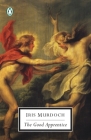
This Iris Murdoch lady can write. Did you guys know? I had never read Murdoch before, but picked up The Good Apprentice recently, and am, like, captivated. Yes, it comes with a blurb from Harold Bloom, but don't let that dissuade you. It is that somewhat rare bird, the truly entertaining philosophical novel. It's about a college student who accidentally kills his friend by slipping him LSD. It's also about the student's family--all deranged in varying degrees, but, like Dostoevsky's characters, they've earned their nuttiness by sincerely trying to understand how to live. It's engrossing, creepy, and quite often hilarious.
I've been revising my own novel frantically as I read Murdoch. I know writers differ on whether it's a good idea to read similar works while writing one's own. I've gone back and forth on this myself, but at the moment I'm firmly in the yes! read them! camp. There's the worry about possibly copying, or--more likely--trying to fit your work into what seems like the other writer's more successful formula. I actually don't think there's much of a risk of either, as long as you understand that your work is different. Whatever the other writer is doing has to be translated into your circumstances and idiom--it must, and will, become yours. I am looking to Murdoch, whose subject and themes are quite similar to those in my new novel, for ways to solve certain problems with pacing. I am not borrowing her prose or even her plot lines, but I am learning patterns and structures.
Specifically, there's the matter of portraying a character's state of mind. As literary theorists, notably Jonathan Culler, remind us, fiction is the one mode that gives us seemingly transparent insight into other minds--though those other minds are, necessarily, fictional (because it's a fiction that we can have access to other minds). Anyway. My question, as a writer is, how do you do that? What's the best way to represent another mind in action?
The dreaded "Show don't tell" mantra doesn't help here. You can show distress by having a character pace and run his fingers through his hair and mutter. You can have him tell another character he's distressed--but not in so many words, of course. But if you want to represent interior life, the life the character lives when he's alone--and I think you do, because otherwise your character is an automaton, simply a reactor to stimuli--you need another mode. You need a form of telling that shows.
Murdoch is a master of showing by telling. Here is just a sampling of Edward's thoughts, shortly after his friend's death:
The reason this passage (and pages and pages of similar passages) works is that it doesn't bore us with mere, abstract telling. The narrator shows us what's in Edward's mind by using the language and rhythm Edward himself uses when he's thinking. He's obsessed, so his language and thoughts are repetitive. He's overwhelmed, self-punishing and self-pitying, so his language is grandiose. At the same time, Edward is intelligent. He is the kind of character who strives to think through his problems, and he has access to concepts that allow him to do so in a sophisticated--if ineffectual--manner. (And his thinking should be ineffectual; there is no easy way to live with, or comprehend, what he's done.)
Reading Murdoch has opened my eyes to the possibilities of this kind of narration--the self-aware interior monologue, in which telling and showing merge. I think such possibilities offer themselves more easily once we learn to really respect our characters. We can give them the ability, which we ourselves possess, to wonder and marvel and obsess and worry inside their own heads. Let them seek truth, as we do, through them.
Shop Indie Bookstores
I've been revising my own novel frantically as I read Murdoch. I know writers differ on whether it's a good idea to read similar works while writing one's own. I've gone back and forth on this myself, but at the moment I'm firmly in the yes! read them! camp. There's the worry about possibly copying, or--more likely--trying to fit your work into what seems like the other writer's more successful formula. I actually don't think there's much of a risk of either, as long as you understand that your work is different. Whatever the other writer is doing has to be translated into your circumstances and idiom--it must, and will, become yours. I am looking to Murdoch, whose subject and themes are quite similar to those in my new novel, for ways to solve certain problems with pacing. I am not borrowing her prose or even her plot lines, but I am learning patterns and structures.
Specifically, there's the matter of portraying a character's state of mind. As literary theorists, notably Jonathan Culler, remind us, fiction is the one mode that gives us seemingly transparent insight into other minds--though those other minds are, necessarily, fictional (because it's a fiction that we can have access to other minds). Anyway. My question, as a writer is, how do you do that? What's the best way to represent another mind in action?
The dreaded "Show don't tell" mantra doesn't help here. You can show distress by having a character pace and run his fingers through his hair and mutter. You can have him tell another character he's distressed--but not in so many words, of course. But if you want to represent interior life, the life the character lives when he's alone--and I think you do, because otherwise your character is an automaton, simply a reactor to stimuli--you need another mode. You need a form of telling that shows.
Murdoch is a master of showing by telling. Here is just a sampling of Edward's thoughts, shortly after his friend's death:
If only he could have, somehow, somewhere, a clean pain, a vital pain, not a death pain, a pain of purgatory by which in time he could work it all away, as a stain which could be patiently worked upon and cleansed and made to vanish. But there was no time, he had destroyed time. This was hell, where there was no time.
The reason this passage (and pages and pages of similar passages) works is that it doesn't bore us with mere, abstract telling. The narrator shows us what's in Edward's mind by using the language and rhythm Edward himself uses when he's thinking. He's obsessed, so his language and thoughts are repetitive. He's overwhelmed, self-punishing and self-pitying, so his language is grandiose. At the same time, Edward is intelligent. He is the kind of character who strives to think through his problems, and he has access to concepts that allow him to do so in a sophisticated--if ineffectual--manner. (And his thinking should be ineffectual; there is no easy way to live with, or comprehend, what he's done.)
Reading Murdoch has opened my eyes to the possibilities of this kind of narration--the self-aware interior monologue, in which telling and showing merge. I think such possibilities offer themselves more easily once we learn to really respect our characters. We can give them the ability, which we ourselves possess, to wonder and marvel and obsess and worry inside their own heads. Let them seek truth, as we do, through them.
Shop Indie Bookstores
Thursday, May 03, 2012
Just a little more on 2666
...because I'm obsessed, still hung over, grasping at the fading glimmers this novel's explosion left in my psyche.
I came across this piece, In the Labyrinth: A User's Guide to Bolaño, on the New Yorker web site. Now, I actually receive the New Yorker at my home on a mostly regular basis, but I hadn't read this piece. I believe that's because, back in February, I was still resenting Bolaño for being dead and yet *still* getting published in the New Yorker more often than almost anyone else. This writing gig is hard enough, New Yorker editors! Must we compete with the deceased as well?
Anyway, the "User's Guide" is mostly interesting and helpful, although I plan to read all of Bolaño's work anyway. And then there was this:

Shop Indie Bookstores
I came across this piece, In the Labyrinth: A User's Guide to Bolaño, on the New Yorker web site. Now, I actually receive the New Yorker at my home on a mostly regular basis, but I hadn't read this piece. I believe that's because, back in February, I was still resenting Bolaño for being dead and yet *still* getting published in the New Yorker more often than almost anyone else. This writing gig is hard enough, New Yorker editors! Must we compete with the deceased as well?
Anyway, the "User's Guide" is mostly interesting and helpful, although I plan to read all of Bolaño's work anyway. And then there was this:
Avoid “2666” for as long as possible, and for heaven’s sake, don’t start with it. The book is a desert of negative space across which the panting reader will search in vain for the traditional pleasures of the novel: form, character, coherence, meaning.
Shop Indie Bookstores
Tuesday, April 24, 2012
Must the Great Novel be large, sprawling, frantic, and a bit of a mess?
No, I didn't disappear under a pile of fennel, but of work...which is like fennel, in that it is tough and large and sometimes hard to cut through, but very good roasted.
Shop Indie Bookstores
In addition, I have been racing to finish Roberto Bolaño's 2666, because I took it out of the library, and although I can renew it for another three weeks, there's a certain shame in that, a certain failure, and so I read and read most of last weekend, instead of working on my own stuff. OK, so I'm still not quite done. And I don't want to be done. This is a book that I'm going to miss when it's over, even though a great deal of it is concerned with war and murder, especially the mass murders of women in Ciudad Juárez, but also of Jews in World War II. In fact there is, at one point, an almost relentless cataloging of murders, a kind of theme with variations, that goes on for hundreds of pages, while various police officers, politicians, and reporters weave in and out, trying and failing to understand, and sometimes disappearing themselves. Yet, these depictions of atrocities never feel exploitative or sentimentalized; as a reader I felt a tremendous weight of confusion and sorrow, which, oddly, made me unable to put the book down.
The preface and afterword explain that 2666 was Bolaño's last work; he wrote it while becoming increasingly ill, and he knew he was dying as he was finishing it. This no doubt added a certain urgency to the prose, perhaps a certain wildness and willingness to plunge into depths that the rest of us either fear too much, or don't know. In addition there is a raggedness and repetitiveness to some sections, which Bolaño might have edited out, had he been given more time. Then again, his other work suggests polish and brevity were not his concerns. And in 2666, hearing of a friend's preference for "short, neatly shaped novels,"* one of the characters muses:
I do think this novel is that other kind, imperfect and torrential. In my opinion, it's right up there with The Brothers Karamazov and Moby-Dick. It has the same vast scope, the same existential cri de coeur at its center, the same rage to comprehend--to encompass and understand--the entire range of human experience. Interestingly, the novel is not much concerned with God or religion, at least not overtly. Literature seems to replace God as a transcendent, unifying principle. Now, normally I don't approve of novels whose theme is writing (and whose main characters are writers), because they suggest that the author simply can't imagine people with professions unlike his own--which is a blatant failure of the writer's task. However, in this case, writing is the ultimate human quest for answers. The writer, as Bolaño has made clear in any number of works, is a detective. He is not, if he's doing it right, some kind of cloistered, disengaged commentator, but a seeker of truth, a religious pilgrim, outlaw, and professional wrestler rolled into one.
But is it true that an authentically great novel must be of this type--big, messy, overtly trying and ultimately failing to embrace everything? My own preference is, in fact, for such novels, though I have never attempted one myself (as yet). Still, this might just be a personal preference. Or is there a reason that the beautifully crafted, smaller "gem" of a book really does fall short of greatness? Does the perfection of craft represent a failure of intellectual or emotional ambition? Should the writer always bite off more than she can chew, or do battle with monsters she can never hope to catch or tame?
*I am quoting from the Note to the First Edition by Ignacio Echevarría.
The preface and afterword explain that 2666 was Bolaño's last work; he wrote it while becoming increasingly ill, and he knew he was dying as he was finishing it. This no doubt added a certain urgency to the prose, perhaps a certain wildness and willingness to plunge into depths that the rest of us either fear too much, or don't know. In addition there is a raggedness and repetitiveness to some sections, which Bolaño might have edited out, had he been given more time. Then again, his other work suggests polish and brevity were not his concerns. And in 2666, hearing of a friend's preference for "short, neatly shaped novels,"* one of the characters muses:
Now even bookish pharmacists are afraid to take on the great, imperfect, torrential works, books that blaze paths into the unknown. They choose the perfect exercises of the great masters. Or what amounts to the same thing: they want to watch the great masters spar, but they have no interest in real combat, when the great masters struggle against that something, that something that terrifies us all, that something that cows us and spurs us on, amid blood and mortal wounds and stench.
I do think this novel is that other kind, imperfect and torrential. In my opinion, it's right up there with The Brothers Karamazov and Moby-Dick. It has the same vast scope, the same existential cri de coeur at its center, the same rage to comprehend--to encompass and understand--the entire range of human experience. Interestingly, the novel is not much concerned with God or religion, at least not overtly. Literature seems to replace God as a transcendent, unifying principle. Now, normally I don't approve of novels whose theme is writing (and whose main characters are writers), because they suggest that the author simply can't imagine people with professions unlike his own--which is a blatant failure of the writer's task. However, in this case, writing is the ultimate human quest for answers. The writer, as Bolaño has made clear in any number of works, is a detective. He is not, if he's doing it right, some kind of cloistered, disengaged commentator, but a seeker of truth, a religious pilgrim, outlaw, and professional wrestler rolled into one.
But is it true that an authentically great novel must be of this type--big, messy, overtly trying and ultimately failing to embrace everything? My own preference is, in fact, for such novels, though I have never attempted one myself (as yet). Still, this might just be a personal preference. Or is there a reason that the beautifully crafted, smaller "gem" of a book really does fall short of greatness? Does the perfection of craft represent a failure of intellectual or emotional ambition? Should the writer always bite off more than she can chew, or do battle with monsters she can never hope to catch or tame?
*I am quoting from the Note to the First Edition by Ignacio Echevarría.
Shop Indie Bookstores
Thursday, February 09, 2012
The Hound of the Baskervilles: Learning to look at faces
This week's reading of Hound is really just a commentary on one phrase. But this little description of Stapleton's physical appearance came pretty close to astounding me. Describing his new acquaintance in a letter to Holmes, Watson writes:
First, the bad news. In searching for the phrase "dry glitter" in the Gutenberg e-text, I discovered that Watson has used it once before, to describe Holmes himself. So points must be deducted for repetition, and for applying what I think is a quite distinctive description to two different characters. Also, the "firm set of his thin lips" doesn't really break new ground imagery-wise. The interpretation of how Stapleton's features might relate to his personality should probably not be attempted except in special circumstances such as these. It's classic showing and then telling, which would normally indicate authorial distrust of the reader--but this is what Watson and Holmes do, of course: observe and then interpret. So Watson gets a pass, although he's probably relying on outdated notions of physiognomy here.
Still--that dry glitter! I like this image immensely, perhaps because it reminds me of a snowy field on a sunny January day. It's also (at least to me) quite unexpected. When eyes glitter, it's usually because they are moist with tears, or sparkling with merriment, or gleaming with malice. The dryness is the surprise, and it intrigues Watson enough to set him speculating. If we want to be really generous--and because I haven't finished the story, I can't be sure this isn't true--we could say that Watson, on some level, recognizes the "dry glitter" in Stapleton's eyes as the same one he's seen in Holmes's, and suspects a similarity in character as well. But right now it feels like a mistake. In any case, Watson--and Conan Doyle--clearly see the image as striking, and worthy of close attention.
Back in 2003, Charles Baxter wrote an article for The Believer about the lack of facial description in contemporary fiction, as opposed to fiction from previous centuries. Reading all these "old" stories for my Borrowed Fire series, I've really come to see how true that is. And it's made me frustrated with what seems like my own limited repertoire for describing characters physically: stocky, short, thin, tall, blue eyes, brown hair, glasses... Dull! Without making the kinds of claims Watson makes about the direct relationship of appearance to inner character, surely we all can do better.
Why not spend an afternoon in a cafe surreptitiously glancing at the people nearby and describing their features in our notebooks? Not just their faces, but bodies, gestures, voices. Pay more attention when walking down the street or across campus or through the airport. I'm already thinking of someone I passed on the way to the bank this morning: slightly pigeon-toed, wearing glasses too wide for her face so that her eyes, rather than the lenses, seemed connected by the glasses' bridge... One could even keep a list of these characteristics, to mix and match later.
There is a dry glitter in his eyes, and a firm set of his thin lips, which goes with a positive and possibly a harsh nature.
First, the bad news. In searching for the phrase "dry glitter" in the Gutenberg e-text, I discovered that Watson has used it once before, to describe Holmes himself. So points must be deducted for repetition, and for applying what I think is a quite distinctive description to two different characters. Also, the "firm set of his thin lips" doesn't really break new ground imagery-wise. The interpretation of how Stapleton's features might relate to his personality should probably not be attempted except in special circumstances such as these. It's classic showing and then telling, which would normally indicate authorial distrust of the reader--but this is what Watson and Holmes do, of course: observe and then interpret. So Watson gets a pass, although he's probably relying on outdated notions of physiognomy here.
Still--that dry glitter! I like this image immensely, perhaps because it reminds me of a snowy field on a sunny January day. It's also (at least to me) quite unexpected. When eyes glitter, it's usually because they are moist with tears, or sparkling with merriment, or gleaming with malice. The dryness is the surprise, and it intrigues Watson enough to set him speculating. If we want to be really generous--and because I haven't finished the story, I can't be sure this isn't true--we could say that Watson, on some level, recognizes the "dry glitter" in Stapleton's eyes as the same one he's seen in Holmes's, and suspects a similarity in character as well. But right now it feels like a mistake. In any case, Watson--and Conan Doyle--clearly see the image as striking, and worthy of close attention.
Back in 2003, Charles Baxter wrote an article for The Believer about the lack of facial description in contemporary fiction, as opposed to fiction from previous centuries. Reading all these "old" stories for my Borrowed Fire series, I've really come to see how true that is. And it's made me frustrated with what seems like my own limited repertoire for describing characters physically: stocky, short, thin, tall, blue eyes, brown hair, glasses... Dull! Without making the kinds of claims Watson makes about the direct relationship of appearance to inner character, surely we all can do better.
Why not spend an afternoon in a cafe surreptitiously glancing at the people nearby and describing their features in our notebooks? Not just their faces, but bodies, gestures, voices. Pay more attention when walking down the street or across campus or through the airport. I'm already thinking of someone I passed on the way to the bank this morning: slightly pigeon-toed, wearing glasses too wide for her face so that her eyes, rather than the lenses, seemed connected by the glasses' bridge... One could even keep a list of these characteristics, to mix and match later.
Tuesday, January 31, 2012
The Hound of the Baskervilles: Things May Not Be As They Seem
This week's reading of Conan Doyle's Hound of the Baskervilles gives me to understand that I am still learning how to read the novel. Last week I confidently asserted that Conan Doyle had shut down a possible path to solving the mystery. I heartily approved of this because, as I noted at length, it's important not to give your story--or your reader--too many options, otherwise the mystery seems too easy to solve. You need to set up plausible obstacles for your detective, to enable a satisfying process of unraveling the mystery.
Well, not so much. That is, the above is still true, as far as it goes, but at least one of the paths has turned out not to be permanently shut off. Having been dispatched on a fact-finding mission to Baskerville Hall--minus Holmes, for the time being--Watson discovers that the telegram he and Holmes sent to Barrymore, in order to determine whether he was at home, was not actually delivered into his hands. This means the mysterious bearded stranger who was following Henry Baskerville in London could plausibly be Barrymore after all. Therefore, contrary to my assertion last week, no path can be considered fully closed down until the book is closed. There still needs to be a mechanism for deferring various threads, for making one seem more important than the other at various times. But the world of Sherlock Holmes, I am learning, is one in which you can never quite be certain that you know what you know. This is why Dostoevsky loved detective stories: they're about epistemology.
This whole approach to reading the book, and the world, gets underscored many times over as Watson begins poking around Baskerville Hall and the surrounding moors. First, in the middle of the night, he wakes to the sound of a woman wailing. In the morning he and Baskerville ask Barrymore about it, who replies: "There are only two women in the house, Sir Henry," he answered. "One is the scullery-maid, who sleeps in the other wing. The other is my wife, and I can answer for it that the sound could not have come from her." However:
Then, walking back from his trip to the post office, where he discovers the slip-up with the telegram, Watson is accosted by a man introducing himself as Stapleton, who seems to know an amazing amount about the Baskerville case and Sherlock Holmes's involvement therein. Watson deflects Stapleton's questions about Holmes, to which Stapleton responds: "You are perfectly right to be wary and discreet." So are we, Conan Doyle is telling us, as Watson is our representative in the story. Still, Watson accepts Stapleton's invitation to lunch, as Holmes has tasked him with "study[ing] the neighbours upon the moor." But can Watson trust what Stapleton tells him? We don't know.
Even the landscape participates in this duplicity, as Stapleton points out:
Sadly, Watson sees the truth of the Mire with his own eyes, and let's not dwell on that any more than we have to. (I recently stopped reading a book I was otherwise mostly enjoying because a character killed a puppy. But I will soldier on here.) The point I wish to make here is that in Holmes-world, you must use your eyes, and all your senses, constantly and intensely. Your antenna are always up. At the same time, you must distrust the signals those antennae give you. You're caught in a constant tug-of-war between discovery and doubt--a sort of mire in itself, in which Conan Doyle hopes to trap you, the reader.
I've often wondered how mystery writers contend with the need to dump information on the reader. What are the alternatives to having some witness magically appear and provide, in large chunks of dialog, key information that the reader and detective need to go forward? How do you keep that from just being tedious exposition? Conan Doyle doesn't avoid the large chunks of dialog, as is clear in this section. But so far, all this exposition all coming from people we have at least some reason not to trust. So we are never sure about the status of the information--or of information, period. Maybe it's entirely false, or only partially true, or true, but not in the ways we might think. We're very much off balance and becoming more so, and that's a good thing.
Well, not so much. That is, the above is still true, as far as it goes, but at least one of the paths has turned out not to be permanently shut off. Having been dispatched on a fact-finding mission to Baskerville Hall--minus Holmes, for the time being--Watson discovers that the telegram he and Holmes sent to Barrymore, in order to determine whether he was at home, was not actually delivered into his hands. This means the mysterious bearded stranger who was following Henry Baskerville in London could plausibly be Barrymore after all. Therefore, contrary to my assertion last week, no path can be considered fully closed down until the book is closed. There still needs to be a mechanism for deferring various threads, for making one seem more important than the other at various times. But the world of Sherlock Holmes, I am learning, is one in which you can never quite be certain that you know what you know. This is why Dostoevsky loved detective stories: they're about epistemology.
This whole approach to reading the book, and the world, gets underscored many times over as Watson begins poking around Baskerville Hall and the surrounding moors. First, in the middle of the night, he wakes to the sound of a woman wailing. In the morning he and Baskerville ask Barrymore about it, who replies: "There are only two women in the house, Sir Henry," he answered. "One is the scullery-maid, who sleeps in the other wing. The other is my wife, and I can answer for it that the sound could not have come from her." However:
And yet he lied as he said it, for it chanced that after breakfast I met Mrs. Barrymore in the long corridor with the sun full upon her face. She was a large, impassive, heavy-featured woman with a stern set expression of mouth. But her tell-tale eyes were red and glanced at me from between swollen lids. It was she, then, who wept in the night, and if she did so her husband must know it. Yet he had taken the obvious risk of discovery in declaring that it was not so. Why had he done this? And why did she weep so bitterly? Already round this pale-faced, handsome, black-bearded man there was gathering an atmosphere of mystery and of gloom.
Then, walking back from his trip to the post office, where he discovers the slip-up with the telegram, Watson is accosted by a man introducing himself as Stapleton, who seems to know an amazing amount about the Baskerville case and Sherlock Holmes's involvement therein. Watson deflects Stapleton's questions about Holmes, to which Stapleton responds: "You are perfectly right to be wary and discreet." So are we, Conan Doyle is telling us, as Watson is our representative in the story. Still, Watson accepts Stapleton's invitation to lunch, as Holmes has tasked him with "study[ing] the neighbours upon the moor." But can Watson trust what Stapleton tells him? We don't know.
Even the landscape participates in this duplicity, as Stapleton points out:
"...You see, for example, this great plain to the north here with the queer hills breaking out of it. Do you observe anything remarkable about that?"
"It would be a rare place for a gallop."
"You would naturally think so and the thought has cost several their lives before now. You notice those bright green spots scattered thickly over it?"
"Yes, they seem more fertile than the rest."
Stapleton laughed.
"That is the great Grimpen Mire," said he. "A false step yonder means death to man or beast. Only yesterday I saw one of the moor ponies wander into it. He never came out. I saw his head for quite a long time craning out of the bog-hole, but it sucked him down at last. Even in dry seasons it is a danger to cross it, but after these autumn rains it is an awful place. And yet I can find my way to the very heart of it and return alive. By George, there is another of those miserable ponies!"
Sadly, Watson sees the truth of the Mire with his own eyes, and let's not dwell on that any more than we have to. (I recently stopped reading a book I was otherwise mostly enjoying because a character killed a puppy. But I will soldier on here.) The point I wish to make here is that in Holmes-world, you must use your eyes, and all your senses, constantly and intensely. Your antenna are always up. At the same time, you must distrust the signals those antennae give you. You're caught in a constant tug-of-war between discovery and doubt--a sort of mire in itself, in which Conan Doyle hopes to trap you, the reader.
I've often wondered how mystery writers contend with the need to dump information on the reader. What are the alternatives to having some witness magically appear and provide, in large chunks of dialog, key information that the reader and detective need to go forward? How do you keep that from just being tedious exposition? Conan Doyle doesn't avoid the large chunks of dialog, as is clear in this section. But so far, all this exposition all coming from people we have at least some reason not to trust. So we are never sure about the status of the information--or of information, period. Maybe it's entirely false, or only partially true, or true, but not in the ways we might think. We're very much off balance and becoming more so, and that's a good thing.
Tuesday, January 03, 2012
What art is for: yet another explanation
Reading Adam Hochschild's review of Laurent Dubois's new book, Haiti: The Aftershocks of History, in the NYT Book Review, I was drawn to these lines: "American officials declared, accurately enough, that the Haitian
government was in bad shape and needed reform. But as the troops on the
ground discovered, like their counterparts in Iraq and Afghanistan, no
one likes to be reformed at the point of a foreigner’s gun."
We've all read sentences like that last one hundreds of times in the past, oh, ten years, right? The point seems simple enough, and yet, as stark as that reality is, the failure of huge numbers of policy makers to understand it is more so. This problem goes beyond the well-known failures to become familiar with the invadee's language, history, culture, religion, etc., though these are encompassed by the overall problem: the failure of imagination itself. In Haiti as in other misadventures, invading powers could not--or would not--imagine what they might do if some other country tried to impose its values on them by force, even if they agreed with some or most of those values.
In literature classes I've taught over the years, we've often discussed the role of fiction in fostering empathy. In fiction, we are given direct insight into the minds of other people, albeit fictional people, a position we are absolutely denied in real life. (In fact, even in nonfiction works in which the author tries to reconstruct the thoughts of, say, George Washington, that Washington is necessarily fictional, because we cannot know the real thoughts of the real Washington.) Martha Nussbaum, for one, has argued that this experience of putting oneself in the place of another (or another in the place of oneself, maybe) transfers to real life: for Nussbaum reading fiction, at least certain realistic kinds of fiction like Dickens's, makes us more empathic, i.e. better.
Personally I would not go that far. In my experience, it is possible to voraciously read the most refined literary fiction while remaining an asshole. And I don't think reading Hard Times would have done anything for all those who jittered with anticipation to invade Iraq; it would have fallen on blind eyes, as it were. Something else is involved in making that leap, in having both the ability and the desire to make that leap. But this thought did occur to me: if nothing else, the existence of fiction and other forms of art remind us of the importance of the leap--that is, of imagination. Where imagination is valued--widely praised, engaged in, and made available in the richest possible variety of forms--the leap is valued. Trying to picture what it is like to be someone else, even someone not obviously similar to oneself, will come easier. Will seem like a more obvious thing to do. Will not seem silly or beside the point in deciding what to do and how to live.
So bring on the art--art we hate, art we love, art we aren't sure about. The more the better.
We've all read sentences like that last one hundreds of times in the past, oh, ten years, right? The point seems simple enough, and yet, as stark as that reality is, the failure of huge numbers of policy makers to understand it is more so. This problem goes beyond the well-known failures to become familiar with the invadee's language, history, culture, religion, etc., though these are encompassed by the overall problem: the failure of imagination itself. In Haiti as in other misadventures, invading powers could not--or would not--imagine what they might do if some other country tried to impose its values on them by force, even if they agreed with some or most of those values.
In literature classes I've taught over the years, we've often discussed the role of fiction in fostering empathy. In fiction, we are given direct insight into the minds of other people, albeit fictional people, a position we are absolutely denied in real life. (In fact, even in nonfiction works in which the author tries to reconstruct the thoughts of, say, George Washington, that Washington is necessarily fictional, because we cannot know the real thoughts of the real Washington.) Martha Nussbaum, for one, has argued that this experience of putting oneself in the place of another (or another in the place of oneself, maybe) transfers to real life: for Nussbaum reading fiction, at least certain realistic kinds of fiction like Dickens's, makes us more empathic, i.e. better.
Personally I would not go that far. In my experience, it is possible to voraciously read the most refined literary fiction while remaining an asshole. And I don't think reading Hard Times would have done anything for all those who jittered with anticipation to invade Iraq; it would have fallen on blind eyes, as it were. Something else is involved in making that leap, in having both the ability and the desire to make that leap. But this thought did occur to me: if nothing else, the existence of fiction and other forms of art remind us of the importance of the leap--that is, of imagination. Where imagination is valued--widely praised, engaged in, and made available in the richest possible variety of forms--the leap is valued. Trying to picture what it is like to be someone else, even someone not obviously similar to oneself, will come easier. Will seem like a more obvious thing to do. Will not seem silly or beside the point in deciding what to do and how to live.
So bring on the art--art we hate, art we love, art we aren't sure about. The more the better.
Friday, December 16, 2011
The author as enforcer
How about another Franzen Friday? Well, why not? I mean, the poor guy hardly gets any attention anymore. Having finished Freedom, and mostly* enjoyed it immensely, I moseyed over to the Paris Review to read the interview with Franzen from last winter.
What I find comforting about this interview is that Franzen's concerns about fiction seem closely aligned to my own, which means that I, too, will someday reach the same pinnacle of fame and success on which he is now ambivalently ensconced! OK, probably not. But I can learn from his trajectory. For instance, like my own, a lot of Franzen's early works grew out of his engagement with science fiction. And this fondness for big ideas, or "systems," to use his term, meant that his characters were created to serve the system. Now, he says, it's the other way around: any "system" that's apparent in the novel is there to serve the characters. However, he still has to remind himself every time to start with character; his tendency, even now, is to start with the system, and he has to learn "the hard way" not to do that.
Yet. I myself am not ready entirely to jettison "systems," and one reason is this nagging suspicion I have of realism as a genre. Helpfully, Franzen addresses that in a way I hadn't thought of before:
This "enforcer" role--the author as stripper-away-of-enchantment--is, I think, part of my problem with realism. I like a sense of enchantment in novels, even if there's no actual magic or flying cars or mind-reading; that is, even as I'm absorbed in the story, I like dimly realizing the whole time that I am elsewhere--emphatically not in the real world. Authors who are obviously striving to make that sense impossible (*ahem* Carver) tend to irritate me. You don't have to be some po-mo riff artist, gleefully calling attention to the constructedness of all texts, and to the fact that all is text, to create a pleasant sense of artifice within your work. I don't like the concept of art as spell-breaking; I prefer spell-creating, which is not the same thing as bewitching or misleading. In this view, the author can be a guide to this slightly different reality, not an enforcer.
*I still think it's a little too sadistic to certain characters, and--like The Corrections--features a lengthy, detailed investigation of human feces. I dunno, is that supposed to be a sign of fearless confrontation with life's realities? I guess it's meant as that stark blend of comedy and horror that can work sublimely in fiction...but to me it just seems juvenile.
What I find comforting about this interview is that Franzen's concerns about fiction seem closely aligned to my own, which means that I, too, will someday reach the same pinnacle of fame and success on which he is now ambivalently ensconced! OK, probably not. But I can learn from his trajectory. For instance, like my own, a lot of Franzen's early works grew out of his engagement with science fiction. And this fondness for big ideas, or "systems," to use his term, meant that his characters were created to serve the system. Now, he says, it's the other way around: any "system" that's apparent in the novel is there to serve the characters. However, he still has to remind himself every time to start with character; his tendency, even now, is to start with the system, and he has to learn "the hard way" not to do that.
Yet. I myself am not ready entirely to jettison "systems," and one reason is this nagging suspicion I have of realism as a genre. Helpfully, Franzen addresses that in a way I hadn't thought of before:
You know, enchantment has a positive connotation, but even in fairy tales it’s not a good thing, usually. When you’re under enchantment, you’re lost to the world. And the realist writer can play a useful and entertaining role in violently breaking the spell. But something about the position this puts the writer in, as a possessor of truth, as an epistemological enforcer, has come to make me uncomfortable. I’ve become more interested in joining the characters in their dream, and experiencing it with them, and less interested in the mere fact that it’s a dream.
This "enforcer" role--the author as stripper-away-of-enchantment--is, I think, part of my problem with realism. I like a sense of enchantment in novels, even if there's no actual magic or flying cars or mind-reading; that is, even as I'm absorbed in the story, I like dimly realizing the whole time that I am elsewhere--emphatically not in the real world. Authors who are obviously striving to make that sense impossible (*ahem* Carver) tend to irritate me. You don't have to be some po-mo riff artist, gleefully calling attention to the constructedness of all texts, and to the fact that all is text, to create a pleasant sense of artifice within your work. I don't like the concept of art as spell-breaking; I prefer spell-creating, which is not the same thing as bewitching or misleading. In this view, the author can be a guide to this slightly different reality, not an enforcer.
*I still think it's a little too sadistic to certain characters, and--like The Corrections--features a lengthy, detailed investigation of human feces. I dunno, is that supposed to be a sign of fearless confrontation with life's realities? I guess it's meant as that stark blend of comedy and horror that can work sublimely in fiction...but to me it just seems juvenile.
Friday, December 09, 2011
On finally finding Franzen's Freedom
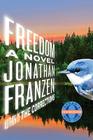
So there's this book out? It's called Freedom? Jonathan Franzen wrote it and it's all the rage! Oh, wait, this isn't 2010. Heck, it's hardly even 2011 anymore. However, never let it be said that I don't follow literary trends. I just don't follow them at the same time as everyone else.
All this is to say that I am finally reading Freedom, an activity I'd actually been dreading. Having read the excerpt in the New Yorker, and then the zillions of sugar-and-or-bile-coated reviews, I had formed certain expectations, the most notable being that Franzen would be condescending to his characters, especially his female characters. As much as I loved The Corrections, I sensed this condescension, even contempt, and the New Yorker excerpt of Freedom seemed to have the same whiff about it, only in spades.
Well, this does turn out to be true in Freedom. With the caveat that I have not finished the book, I would say that the portrayal of Patty does seem to come from an on-high, nose-wrinkled perch. Her "autobiography" in particular is puzzling in its language. It's supposedly her own work, and seems to show an intentional lack of familiarity with the finer cultural attainments , but it also contains numerous Franzenian displays of wit and acuity that a character like this would, by the author's own definition, not be capable of.
And yet the damn thing is riveting. I cannot wait to sit down with the book at the end of the day, and as soon as I open it, I am absorbed. Why? How? First off, although the author seems unable to directly overcome his condescension, it also seems he has found a way to work with it, so that it becomes an integral part of the story rather than working against it. The novel so far is starting to look like the author's battle with his own schadenfreude toward bourgeois mediocrity. And I think that's a battle more of us are fighting than we might like to admit. Everyone, truly, knows about jealousy and the joy of discovering that one's seemingly perfect neighbors or coworkers or whomever don't have it all, after all.
But what are we to do with this embarrassing recognition of our own failings to be sympathetic and good and decent? A lesser author might revel in it, but Franzen does not. He seems to use this discomfort with his authorial stance to drive himself to find deeper compassion for his characters. Whatever schadenfreude he and we are experiencing does not reduce the characters to cartoons: quite the opposite. Patty and the other characters are portrayed with such careful detail, such nuance, such understandable ambivalence and contradiction, that I, at least, have ended up rooting for them more than I might have in a less overdetermined portrait.
Also, let's face it, the book is something of a soap opera. Neighborhood spats, filial dynamics gone terribly wrong, guilt-ridden yet passionate love affairs...Plus it's quite funny.
So, hey, check out this new book by this budding young talent. Remember, you heard it here last.
Shop Indie Bookstores
All this is to say that I am finally reading Freedom, an activity I'd actually been dreading. Having read the excerpt in the New Yorker, and then the zillions of sugar-and-or-bile-coated reviews, I had formed certain expectations, the most notable being that Franzen would be condescending to his characters, especially his female characters. As much as I loved The Corrections, I sensed this condescension, even contempt, and the New Yorker excerpt of Freedom seemed to have the same whiff about it, only in spades.
Well, this does turn out to be true in Freedom. With the caveat that I have not finished the book, I would say that the portrayal of Patty does seem to come from an on-high, nose-wrinkled perch. Her "autobiography" in particular is puzzling in its language. It's supposedly her own work, and seems to show an intentional lack of familiarity with the finer cultural attainments , but it also contains numerous Franzenian displays of wit and acuity that a character like this would, by the author's own definition, not be capable of.
And yet the damn thing is riveting. I cannot wait to sit down with the book at the end of the day, and as soon as I open it, I am absorbed. Why? How? First off, although the author seems unable to directly overcome his condescension, it also seems he has found a way to work with it, so that it becomes an integral part of the story rather than working against it. The novel so far is starting to look like the author's battle with his own schadenfreude toward bourgeois mediocrity. And I think that's a battle more of us are fighting than we might like to admit. Everyone, truly, knows about jealousy and the joy of discovering that one's seemingly perfect neighbors or coworkers or whomever don't have it all, after all.
But what are we to do with this embarrassing recognition of our own failings to be sympathetic and good and decent? A lesser author might revel in it, but Franzen does not. He seems to use this discomfort with his authorial stance to drive himself to find deeper compassion for his characters. Whatever schadenfreude he and we are experiencing does not reduce the characters to cartoons: quite the opposite. Patty and the other characters are portrayed with such careful detail, such nuance, such understandable ambivalence and contradiction, that I, at least, have ended up rooting for them more than I might have in a less overdetermined portrait.
Also, let's face it, the book is something of a soap opera. Neighborhood spats, filial dynamics gone terribly wrong, guilt-ridden yet passionate love affairs...Plus it's quite funny.
So, hey, check out this new book by this budding young talent. Remember, you heard it here last.
Shop Indie Bookstores
Thursday, November 10, 2011
On responding to reviewers
I'm intrigued by Jonathan Lethem's essay, "My Disappointment Critic," which responds to James Wood's negative review of The Fortress of Solitude. For those not closely following Lethem's career (why not?), Fortress and the review were published eight years ago. But, Lethem admits, he couldn't stop thinking about Wood's misrepresentations of his work:
Lethem's points are interesting, subtle, and also humorous, so it would be better for you to read the piece rather than for me to try to summarize his objections. The upshot is that Wood, in Lethem's view, simply wanted to read a different book than Fortress turned out to be: he did not evaluate it on its own terms. Moreover, Wood's terms are unnecessarily snobbish.
Now, I'm quite fond of the work of both Lethem and Wood, so I feel a little sad that they apparently don't see eye to eye. As far as I know, I am also yet to have the experience of a critic reviewing my own work. My general sense, though, is that one must resist the urge to respond to either good or bad reviews, to avoid looking overly needy ("Thank you for that great review! It made my day!") or bitter and pompous ("You are obviously too dumb to discern the subtleties of my prose."). But clearly writers violate this tenet all the time: witness the Letters section of the NYT Book Review. It does seem that, especially when hemmed in by tight deadlines and multiple obligations, critics can miss key points; or they can start out with fixed expectations and then, in the interests of time and simplicity, judge the book according to those. And writers can fail to get their intended points across. This is a slipperier business in fiction, though; I think readers should be free to see what they see in a story, even if the author didn't consciously put it there. Otherwise, what are book clubs and lit discussion sections for?*
Lethem makes a careful and convincing argument on his own behalf; I have no doubt Wood, if he so chooses, could do the same. What I like most about this piece, though, is how it reveals the humanity of both author and critic. Both are flawed, as writers and as people, even though their positions in this dynamic require that both pretend not to be. ("Here is my perfect book." "Here is my meticulous, objective judgment of that book." "Your judgment affects me not at all." "Your judgment of my judgment means nothing.") These formal rituals are built up to conceal very basic human questions: Do you like me? Am I good? Do I know anything for certain? It's worth remembering that both reviewer and reviewee have these questions.
In writing this piece, Lethem took the risk of seeming whiny, petty, needy, etc. But in bringing out the subtle, human dynamics of the writer's life, I think he did the right thing.
*This reminds me of another post I ought to do sometime, on the depiction of English/literature classes in film and TV. Unlike the vast majority of my experience, as a student and a teacher, classes in these shows invariably have a Socratic-style professor dragging the "correct" meaning of a passage out of the students: What does Romeo mean when he says...? Right you are, Billy! Or: Nnooo, that's not quite what he's saying; how about a hint? The students are occasionally inspired, if the teacher is passionate and/or colorful, but more often they are bored, and rightly so. This is bad publicity for the literary profession, and something really should be done about it!
I’d have taken a much worse evaluation from Wood than I got, if it had seemed precise and upstanding. I wanted to learn something about my work. Instead I learned about Wood. The letdown startled me. I hadn’t realized until Wood was off my pedestal that I’d built one. That I’d sunk stock in the myth of a great critic. Was this how Rushdie or DeLillo felt — not savaged, in fact, but harassed, by a knight only they could tell was armorless?
Lethem's points are interesting, subtle, and also humorous, so it would be better for you to read the piece rather than for me to try to summarize his objections. The upshot is that Wood, in Lethem's view, simply wanted to read a different book than Fortress turned out to be: he did not evaluate it on its own terms. Moreover, Wood's terms are unnecessarily snobbish.
Now, I'm quite fond of the work of both Lethem and Wood, so I feel a little sad that they apparently don't see eye to eye. As far as I know, I am also yet to have the experience of a critic reviewing my own work. My general sense, though, is that one must resist the urge to respond to either good or bad reviews, to avoid looking overly needy ("Thank you for that great review! It made my day!") or bitter and pompous ("You are obviously too dumb to discern the subtleties of my prose."). But clearly writers violate this tenet all the time: witness the Letters section of the NYT Book Review. It does seem that, especially when hemmed in by tight deadlines and multiple obligations, critics can miss key points; or they can start out with fixed expectations and then, in the interests of time and simplicity, judge the book according to those. And writers can fail to get their intended points across. This is a slipperier business in fiction, though; I think readers should be free to see what they see in a story, even if the author didn't consciously put it there. Otherwise, what are book clubs and lit discussion sections for?*
Lethem makes a careful and convincing argument on his own behalf; I have no doubt Wood, if he so chooses, could do the same. What I like most about this piece, though, is how it reveals the humanity of both author and critic. Both are flawed, as writers and as people, even though their positions in this dynamic require that both pretend not to be. ("Here is my perfect book." "Here is my meticulous, objective judgment of that book." "Your judgment affects me not at all." "Your judgment of my judgment means nothing.") These formal rituals are built up to conceal very basic human questions: Do you like me? Am I good? Do I know anything for certain? It's worth remembering that both reviewer and reviewee have these questions.
In writing this piece, Lethem took the risk of seeming whiny, petty, needy, etc. But in bringing out the subtle, human dynamics of the writer's life, I think he did the right thing.
*This reminds me of another post I ought to do sometime, on the depiction of English/literature classes in film and TV. Unlike the vast majority of my experience, as a student and a teacher, classes in these shows invariably have a Socratic-style professor dragging the "correct" meaning of a passage out of the students: What does Romeo mean when he says...? Right you are, Billy! Or: Nnooo, that's not quite what he's saying; how about a hint? The students are occasionally inspired, if the teacher is passionate and/or colorful, but more often they are bored, and rightly so. This is bad publicity for the literary profession, and something really should be done about it!
Tuesday, October 25, 2011
Is art too tiring?
So we got the first disk of Beckett on Film from Netflix (hooray, not Qwikster!) about two weeks ago. Today I sent it back unwatched. Instead of Waiting for Godot, we spent the last two weeks on a steady diet of Friday Night Lights alternating with Arrested Development.
Now, as middlebrow entertainments go, these two shows are near the top, critical-acclaim-wise. No Celebrity Liposuction for us!* And yet, compared to Beckett, neither can be called challenging. FNL has plenty of emotional drama, and often crosses the line into melodrama; I care about the characters and events, and am even strongly moved on occasion. So there's an emotional challenge, I guess--but I can't say the show makes me think or wonder, beyond "What's Tim Riggins going to do now?" And AD...well, it's just funny.
The thing is, I've always loved Beckett, or thought I did, so why didn't I want to watch the DVD? The answer seems to be that after a full day of writing and/or editing, I just didn't have the energy. I knew the Beckett was going to require something from me--even Godot would, and it's the least challenging of all his work. I want to be done working in the evening. Not that I want to turn my brain off, or have it bludgeoned into irredeemable stupidity by some reality show. I want to be engaged, but not asked to do too much; I'll row, but I don't want to be the one in front (or back, or whichever one does the most work).
But this is a worrisome realization. I think of myself as an advocate for high art--you know, literature and its ilk, the stuff you're supposed to need some sort of college-level training to enjoy. If I can't bring myself to pop in that Beckett DVD after a work day, what hope is there for people who have no stake in supporting the arts? What if most people just have too much going on mentally to devote any extra brainpower to the finer creations of humanity? Can we blame our overworked, overstressed populace if they pick their mental and emotional battles, and they don't pick art?
Maybe watching the Beckett would have refreshed and invigorated me with its greatness, whereas FNL and AD mostly soothed me. But at a certain point, soothing is what I want.
*I don't think this show actually exists.
Now, as middlebrow entertainments go, these two shows are near the top, critical-acclaim-wise. No Celebrity Liposuction for us!* And yet, compared to Beckett, neither can be called challenging. FNL has plenty of emotional drama, and often crosses the line into melodrama; I care about the characters and events, and am even strongly moved on occasion. So there's an emotional challenge, I guess--but I can't say the show makes me think or wonder, beyond "What's Tim Riggins going to do now?" And AD...well, it's just funny.
The thing is, I've always loved Beckett, or thought I did, so why didn't I want to watch the DVD? The answer seems to be that after a full day of writing and/or editing, I just didn't have the energy. I knew the Beckett was going to require something from me--even Godot would, and it's the least challenging of all his work. I want to be done working in the evening. Not that I want to turn my brain off, or have it bludgeoned into irredeemable stupidity by some reality show. I want to be engaged, but not asked to do too much; I'll row, but I don't want to be the one in front (or back, or whichever one does the most work).
But this is a worrisome realization. I think of myself as an advocate for high art--you know, literature and its ilk, the stuff you're supposed to need some sort of college-level training to enjoy. If I can't bring myself to pop in that Beckett DVD after a work day, what hope is there for people who have no stake in supporting the arts? What if most people just have too much going on mentally to devote any extra brainpower to the finer creations of humanity? Can we blame our overworked, overstressed populace if they pick their mental and emotional battles, and they don't pick art?
Maybe watching the Beckett would have refreshed and invigorated me with its greatness, whereas FNL and AD mostly soothed me. But at a certain point, soothing is what I want.
*I don't think this show actually exists.
Tuesday, October 11, 2011
Strangeness in fiction
From John Gardner's On Becoming a Novelist:
I've been thinking about this in the context of realistic vs. non-realistic fiction. From time to time I've implied a bias against "realist" fiction in favor of fabulist or magical realist fiction. But I'm not sure that's the right way to explain my preference. A novel like Joseph O'Neill's Netherland, not to mention The Brothers Karamazov, is perfectly realistic--the events depicted could literally happen on this earth. (BK does contain "The Grand Inquisitor," a story in which Jesus returns to earth during the Inquisition, but it's a story told by a character who's beginning to lose his mind.) Yet both of those books seem magical to me, and I think it has to do with Gardner's concept of strangeness.
Gardner doesn't do the best job here of explaining strangeness, but that's the point. It is one of those know-it-when-you-see-it things. He gets closest, I think, with the ordinary and the extraordinary briefly interpenetrating. The briefness is important. If you create a world in which the ordinary is always extraordinary, then you have a sort of bizarro world as your starting point, and have to do even more to generate some kind of informative strangeness. (I'm sure this can be done, and encourage all attempts.) But brief glimpses of deep craziness can suggest the power of that craziness more strongly. We spend most of our time on land, but 71% of the earth's surface is ocean, and every now and then we hear its roar, or we fall in.
So I guess what I object to is not realist fiction as such, but fiction that takes the representation of ordinary reality as its endpoint. That sort of work surely takes skill and dedication. However, like Gardner, I think art ought to aim higher, and deeper.
Shop Indie Bookstores
There can be no great art, according to the poet Coleridge, without a certain strangeness. Most readers will recognize at once that he's right. There come moments in every great novel when we are startled by some development that is at once perfectly fitting and completely unexpected [...], or those moments we experience in many novels when the ordinary and the extraordinary briefly interpenetrate, or things common suddenly show, if only for an instant, a different face. One has to be just a little crazy to write a great novel. One has to be capable of allowing the darkest, most ancient and shrewd parts of one's being to take over the work from time to time. Or be capable of cracking the door now and then to the deep craziness of life itself [...].
I've been thinking about this in the context of realistic vs. non-realistic fiction. From time to time I've implied a bias against "realist" fiction in favor of fabulist or magical realist fiction. But I'm not sure that's the right way to explain my preference. A novel like Joseph O'Neill's Netherland, not to mention The Brothers Karamazov, is perfectly realistic--the events depicted could literally happen on this earth. (BK does contain "The Grand Inquisitor," a story in which Jesus returns to earth during the Inquisition, but it's a story told by a character who's beginning to lose his mind.) Yet both of those books seem magical to me, and I think it has to do with Gardner's concept of strangeness.
Gardner doesn't do the best job here of explaining strangeness, but that's the point. It is one of those know-it-when-you-see-it things. He gets closest, I think, with the ordinary and the extraordinary briefly interpenetrating. The briefness is important. If you create a world in which the ordinary is always extraordinary, then you have a sort of bizarro world as your starting point, and have to do even more to generate some kind of informative strangeness. (I'm sure this can be done, and encourage all attempts.) But brief glimpses of deep craziness can suggest the power of that craziness more strongly. We spend most of our time on land, but 71% of the earth's surface is ocean, and every now and then we hear its roar, or we fall in.
So I guess what I object to is not realist fiction as such, but fiction that takes the representation of ordinary reality as its endpoint. That sort of work surely takes skill and dedication. However, like Gardner, I think art ought to aim higher, and deeper.
Shop Indie Bookstores
Tuesday, October 04, 2011
Would you read hypertext fiction?
Paul Lafarge has a very interesting piece in Salon today about hypertext fiction. Like Lafarge, I remember that moment in the 1990s when it seemed like hyptertext fiction was really the next big thing--as important an invention as the novel itself. But then, as Lafarge puts it, nothing happened. To his credit, Lafarge still thinks it's a form worth pursuing, and to his even greater credit, he is writing a hypertext story himself, Luminous Airplanes.
I took a look at the story. It's very well designed, and the craft, so far, looks lovely. But I have to admit that my overall feeling, as soon as I began clicking through, was anxiety. I followed a link, hit "back," and did not know where I was going back to. Was it the same "back" as if I had not followed the link? It didn't seem so. I stopped reading, becoming completely concerned with the question of "where I was." I wanted a flow chart.*
Now, presumably, the more experienced reader of hypertext is not only accustomed to the loss of a single main thread--the handrail of linearity, if you will--but embraces that loss. Non-linearity is the point. So maybe it is just a matter of experience, and of being willing to let myself be lost, not unlike the way one is "lost" in a good, absorbing novel. Perhaps I am like those audience members who ran screaming from the oncoming locomotive in an early example of another new art form, film.
After all, I have spent the past few months trying to read Pynchon's Against the Day (75% done!) and have been lost, as in disoriented, plenty of times. I go leafing back through the heap of pages I thought I had already read, trying to find out who the hell Cyprian is, because apparently I have been introduced to him, but danged if I remember. Lafarge makes the further point that many proto-hypertext novels already exist, such as Hopscotch, Pale Fire, etc., in which flipping back and forth and all over the place is a necessary part of the reading experience.
So what is the difference? Maybe the still-unpleasant aesthetic experience of reading on a computer, which is already being fixed by e-readers and the iPad. After reading Lafarge's article, I do feel I ought to give hypertext another try, as a reader if not as a writer (probably, definitely not as a writer). But it does feel like a lot of work.
*I should point out that there is one, and also a fair amount of help/orientation text, which I was too unsettled to poke around in on my first visit.
I took a look at the story. It's very well designed, and the craft, so far, looks lovely. But I have to admit that my overall feeling, as soon as I began clicking through, was anxiety. I followed a link, hit "back," and did not know where I was going back to. Was it the same "back" as if I had not followed the link? It didn't seem so. I stopped reading, becoming completely concerned with the question of "where I was." I wanted a flow chart.*
Now, presumably, the more experienced reader of hypertext is not only accustomed to the loss of a single main thread--the handrail of linearity, if you will--but embraces that loss. Non-linearity is the point. So maybe it is just a matter of experience, and of being willing to let myself be lost, not unlike the way one is "lost" in a good, absorbing novel. Perhaps I am like those audience members who ran screaming from the oncoming locomotive in an early example of another new art form, film.
After all, I have spent the past few months trying to read Pynchon's Against the Day (75% done!) and have been lost, as in disoriented, plenty of times. I go leafing back through the heap of pages I thought I had already read, trying to find out who the hell Cyprian is, because apparently I have been introduced to him, but danged if I remember. Lafarge makes the further point that many proto-hypertext novels already exist, such as Hopscotch, Pale Fire, etc., in which flipping back and forth and all over the place is a necessary part of the reading experience.
So what is the difference? Maybe the still-unpleasant aesthetic experience of reading on a computer, which is already being fixed by e-readers and the iPad. After reading Lafarge's article, I do feel I ought to give hypertext another try, as a reader if not as a writer (probably, definitely not as a writer). But it does feel like a lot of work.
*I should point out that there is one, and also a fair amount of help/orientation text, which I was too unsettled to poke around in on my first visit.
Tuesday, August 16, 2011
Is Pynchon overrated?
So here's that much-read Slate piece about famous books that are overrated. Or at least that these particular authors never liked. Gravity's Rainbow comes up a couple of times, and that's a book I actually love. I think I love it, that is.
I agree with Elif Batuman on this issue: a particular book has to reach you at a particular time. I read GR when my father and I were driving cross country from Ohio to Berkeley, where I was about to start grad school. I read the book in strange motels in Iowa, Nebraska, and Wyoming, while during the day we covered vast stretches of stark landscape and listened to Paul Simon's Graceland. I was on my way to immersing myself in an acid bath of literary theory, which at the the time I was looking forward to, in the same way I looked forward to living in a place with palm trees. Nothing seemed quite real, except being with my dad, and somehow the book brought all that real unreality together. This goes back to a thought I had awhile ago, that the context of reading really is important in making literature part of your life. Reading in a class, or a library cubicle, does not always allow for that kind of rich reading experience.
But I don't know if I'd enjoy reading GR now. And I am bogging down a bit in Against the Day, after my initial enthusiasm. It's just...very...long.
I agree with Elif Batuman on this issue: a particular book has to reach you at a particular time. I read GR when my father and I were driving cross country from Ohio to Berkeley, where I was about to start grad school. I read the book in strange motels in Iowa, Nebraska, and Wyoming, while during the day we covered vast stretches of stark landscape and listened to Paul Simon's Graceland. I was on my way to immersing myself in an acid bath of literary theory, which at the the time I was looking forward to, in the same way I looked forward to living in a place with palm trees. Nothing seemed quite real, except being with my dad, and somehow the book brought all that real unreality together. This goes back to a thought I had awhile ago, that the context of reading really is important in making literature part of your life. Reading in a class, or a library cubicle, does not always allow for that kind of rich reading experience.
But I don't know if I'd enjoy reading GR now. And I am bogging down a bit in Against the Day, after my initial enthusiasm. It's just...very...long.
Tuesday, August 09, 2011
Review of Francisco Goldman's Say Her Name
I got assigned to write this review a few months ago, but due to a timing issue, the publication ended up not being able to use it. This is not a timely review, except that grief is in the air for me these days. And I liked the book, so here's what I had to say about it.
---
Shop Indie Bookstores
---
I am starting to believe that the greatest terror life has in store for us is not death, but grief. Death has an ending, after all; it is the ending. Grief, on the other hand, may subside, but will never truly end. And one of its most awful aspects (it’s a complicated, writhing thing) is helplessness. This is the condition of both the survivor, and—if she is aware of her circumstances—the dying. The loved one pulls away, like the tide withdrawing from the shore, and all anyone can really do is watch. Though sometimes, later, the survivor can also tell the story.
In 2007, Aura Estrada, a young writer and scholar, broke her neck while bodysurfing in Oaxaca and died the next day. Her husband, novelist and journalist Francisco Goldman, wrote Say Her Name in the aftermath of that personal disaster, which was also a loss for the world of letters. The book includes excerpts from Aura’s stories and diaries, which are funny, brightly inventive, and increasingly experimental in their language. In fact, Aura’s promise as a fiction writer is one reason Goldman wrote Say Her Name as a novel: to honor her imagination.
At first, I didn’t realize it was a novel. I found out only after finishing the book and skimming the dust jacket for a hint of how to start talking about it. This was the most brutal portrait of grief I had ever read, and to “review” it—as if there were anything more to say on the subject, especially in the form of critical judgment—seemed absurd. But instead of giving me the handhold I was looking for, the synopsis, puzzlingly, called Say Her Name “the novel of Aura.” Sure enough, the bookstore sticker on the back said it belonged in the fiction section, and so did the Grove/Atlantic Web site. The question should probably not have mattered to me, but it did. What was this terrifying, exhilarating place I’d just emerged from, shaking and desperate to call my husband?
I turned to the New Yorker’s interview with Goldman, in which he discusses the genre issue in some detail. Of course, he says, the extended sections describing Aura’s childhood are fictionalized; since he wasn’t there, how could they not be? More intriguingly, he says the account of his actions as the grieving widower are not (or not all) true. The “narrator” of Say Her Name does things in his anguish that the real Goldman did not. I was relieved to hear that, since much of the narrator’s behavior is reckless and at times cruel. And yet those sections, for me, raised the story far above the finely crafted, moderately touching expression of loss that I might have expected from a grief memoir.
In the novel the bereaved Goldman gets drunk night after night and frequents strip clubs. He hallucinates. He torments himself with accusations that he caused or even desired his wife’s death. He has affairs with Aura’s friends, including a young woman named Ana Eva, at whom he unleashes this twisted, blackly funny tirade:
So take that you fucking Sméagol, you and your Latino straw man marvelous quirkiness of love, go sodomize yourself with your fucking sock puppet, you idiot pendejo!
Ana Eva gaped at me. What had set this off? [….]
She was frightened. She’d drawn back into a corner of the bed. What’s the matter? Was it her? Why was I screaming at her about some Sméagol?
Oh Ana Eva, no, no, it has nothing to do with you. I’m sorry. Something Sméagol, a book critic wrote. He gave us the evil eye on the subway. He fucking killed Aura, not me.
Grief undoes the narrator from inside out, and watching this happen made me fully trust the experience as portrayed. Goldman rejects any redemptive, golden-light-infused “process” to lay bare the reality of his emotion: It’s monstrous. Now he tells me a good portion of the story isn’t true?
Then again, how does the griever himself know what is real? “No happy memory,” Goldman jarringly writes, having already recounted many of them, “that isn’t infected. A virus strain that has jumped from death to life, moving voraciously backward through all memories, obligating me to wish none of it, my own past, had ever happened.” Aura’s death has rewritten his life, making him wish his past—all that has made him who he is—were fiction. What can happiness mean now? What even happened? What’s one more revision of his life story, if grief is the ultimate fabulist?
In the New Yorker interview, Goldman explains how the fictionalized self-portrait reveals a different kind of truth. The man most people saw, in the months and years after Aura’s death, seemed to be doing pretty well. As he mourned he wrote; he taught; he established the Aura Estrada Prize. But all that felt like a lie, he says. In the book, the narrator’s actions reveal the raw, hidden, even shameful experience of grief. He gives it a face. Maybe Goldman also wanted, by writing the fiction, to separate the griever from the person walking the earth under the name “Francisco Goldman.” But it’s equally likely that others, and even he himself, will conflate them. The point is, it really doesn’t matter. The book is very much about Goldman, but also not.
When you get down to it, Say Her Name is about everything, where everything takes the form of Aura. We come to observe life through the lenses of her talent, ambition, astute critiques of academia, humor, Hello Kitty toaster, dresses, travels and culture shocks, and her deep and bracing loves: literature, her troubled mother, her husband. Lost in thought, she misses her subway stops. She loudly recites George Herbert, of all possible poets, when drunk. She wants to have children. She worries that her much older husband will leave her a widow too soon. She adores the beaches of Oaxaca. She wants to learn to bodysurf, but is afraid, so Goldman, who’s been doing it since childhood, shows her how.
Like everyone, and not like anyone, she’s ordinary and extraordinary. She changes Goldman, as he does her, both during her life and after; in the end, her power to transform is just as strong as grief’s. Say Her Name proves how wonderful it is to love someone so much that losing her is so completely devastating. As Goldman puts it:
One of the most common tropes and complaints in the grief books I’ve read is about the loneliness of the deep griever, because people and society seem unable, for the various reasons always listed in those books, to accommodate such pain. But what could anybody possibly do or say to help? Inconsolable does not mean that you are sometimes consolable. The way things are has seemed right to me; it’s all been as it should be, or as if it could not be any other way.
So the helplessness of grief cannot be helped. That makes sense, even if Aura’s strange and awful death does not. The rightness is a kind of consolation.
Still, we wouldn’t want to trade places with Goldman (or Aura) for even one second. Or would we?
Shop Indie Bookstores
Subscribe to:
Posts (Atom)