My story, "Castlewood," a corporate fairy tale, is up at the Mill Valley Literary Review.
Note: pancakes are involved.
Monday, December 15, 2014


Monday, December 01, 2014
Feeling ideas
In their salute to Russian literature yesterday, the NYT Book Review asked their Bookends writers the fascinating but awkwardly worded question, "What Makes the Russian Literature of the 19th Century So Distinctive?" About Dostoevsky, my personal fave, Francine Prose writes, "Dostoyevsky’s people seem real to us, vivid and fully present, even as we suspect that no one ever really behaved as they do, flinging themselves at each other’s feet, telling their life stories at extraordinary length and in excruciating detail to a stranger in a bar."
I still like the explanation that apparently comes from one of Dostoevsky's own characters in A Raw Youth, a book I have never read. This character says that he "feels ideas," a condition that applies to many of Dostoevsky's people--at least to the men (the women seem to just plain feel). It's true that in real life, we rarely see people driving themselves to actual madness over what God really wants from us, or why there is evil, or how we can contribute the most to humanity during our short time on earth. But maybe they should.
Such characters also inhabit Iris Murdoch's novels, which is probably why I've gone a bit nuts for her, too. What I love about these characters is that they deeply care about ideas, about morality, about thinking and meaning. Ideas and morality aren't abstract concepts that one contemplates instead of living. For these people, thinking is living. That probably seems rather foreign, in an American context particularly; but in these novels, ideas are life blood. Thinking makes us more human, and more alive--not less so.
I still like the explanation that apparently comes from one of Dostoevsky's own characters in A Raw Youth, a book I have never read. This character says that he "feels ideas," a condition that applies to many of Dostoevsky's people--at least to the men (the women seem to just plain feel). It's true that in real life, we rarely see people driving themselves to actual madness over what God really wants from us, or why there is evil, or how we can contribute the most to humanity during our short time on earth. But maybe they should.
Such characters also inhabit Iris Murdoch's novels, which is probably why I've gone a bit nuts for her, too. What I love about these characters is that they deeply care about ideas, about morality, about thinking and meaning. Ideas and morality aren't abstract concepts that one contemplates instead of living. For these people, thinking is living. That probably seems rather foreign, in an American context particularly; but in these novels, ideas are life blood. Thinking makes us more human, and more alive--not less so.
Tuesday, November 18, 2014
Pints & Prose in Fairfax tonight!
Join Lindsey Crittenden, the Tuesday Night Writers, and me for Pints & Prose at Peri's Bar in lovely Fairfax, CA! Festivities start at 6 p.m.

Thursday, October 30, 2014
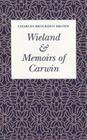
Another good grad school memory: Wieland and Memoirs of Carwin
For several months I've been too scattered to do much other than tweet, write the occasional blog post, and--oh yeah--do my day job. But now I'm thinking about resuming work on my third novel, while Novel the Second seeks a home. I was about 40 pages in, last time I touched it, and it's at least partly inspired by what scholars have called the first American novel: Wieland by Charles Brockden Brown.
The cool thing to realize about this novel, first published in 1798, is that it's about a ventriloquist who drives a man to murder his family by making him think God is speaking to him. Yep, the first American novel is a (sort of) paranormal/religious/serial-killer thriller, which reflects fears of democracy and the "voice of the people." It's great stuff, and the prospect of revisiting Wieland is exciting enough to get me back in the writing chair. Religious nuttiness + ventriloquism. What can go wrong?
I see my book-in-progress as a combination of this and Gogol's "The Overcoat," set in a comparative literature department--just by coincidence.
Shop Indie Bookstores
The cool thing to realize about this novel, first published in 1798, is that it's about a ventriloquist who drives a man to murder his family by making him think God is speaking to him. Yep, the first American novel is a (sort of) paranormal/religious/serial-killer thriller, which reflects fears of democracy and the "voice of the people." It's great stuff, and the prospect of revisiting Wieland is exciting enough to get me back in the writing chair. Religious nuttiness + ventriloquism. What can go wrong?
I see my book-in-progress as a combination of this and Gogol's "The Overcoat," set in a comparative literature department--just by coincidence.
Shop Indie Bookstores
Thursday, October 09, 2014
Bigfoot and the Baby at Litquake, Monday, October 13
Just found out I'm on the "First-Time Authors Reveal All" panel at this year's Litquake! I'll be chatting with Amrit Chima and Edan Lepucki at 3 p.m. the Foundation Center in San Francisco. Follow the link to pre-register.

Update: Here's a great write-up of our conversation from an attendee, writer and blogger Clare Ramsaran.
Update: Here's a great write-up of our conversation from an attendee, writer and blogger Clare Ramsaran.
Tuesday, October 07, 2014
Why is Bigfoot scary (and funny)?
Just in time for Halloween, I contemplate this pressing question over at G. G. Andrew's Writers Who Read blog.

Monday, September 29, 2014
Thursday, October 2: Bigfoot and the Baby at Books, Inc. Palo Alto
This Thursday, join us at Palo Alto's favorite indie bookstore, Books, Inc., at 7 p.m. I'll be reading and chatting with Tanya Landsberger about cryptozoology, consumerism, and comedy. We'll also have wine and, I believe, a very special ale.
Hope to see you there!

Hope to see you there!
Thursday, September 25, 2014
The evolution of Jackie Majesky
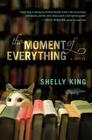
This is a blog hop, y'all. I'm taking the hand-off from Shelly King, whose debut novel, The Moment of Everything, came out this month from Grand Central. It's a funny and quite touching story of a Silicon Valley geek who finds her true calling--and family--at a used bookstore. Buy it at your favorite indie shop!
Shop Indie Bookstores
Now, here's an introduction to the main character of my novel, Bigfoot and the Baby. I should note that neither Bigfoot nor the Baby is actually the main character, but they are both significant characters. And you could argue that the novel has three main characters, since at various times we're inside the head of Jackie, her husband Kyle, or their daughter Katie. But I consider Jackie to be the lead, since she's the one who (I believe) undergoes and also brings about the greatest change.
I've been told she's not the easiest character to like. She certainly would be a difficult friend to have, which is possibly why she doesn't have many, at least at the novel's beginning. She's fearful, judgmental, grandiose, a little desperate. When the novel opens, she has recently latched onto an apocalyptic brand of Christianity as a way of channeling her unfocused fear and sadness, and she's trying to convince her family that the end is nigh. But they have other priorities, which she cannot understand for the life of her.
Is Jackie like me? In all but the religion, well, yes. I gave her some of my worst qualities (amplifying them, I hope, beyond their normal measure). But I also gave her a lot of my hopes--to do something important with my life, to make the world a better place, to love and be loved, fully and sincerely. And I have a lot of sympathy for women who feel they were somehow born in a place that was too small for them--who tried to do what they thought was the right thing, only to find it wasn't the right thing for them.
Jackie's world does get bigger, in a way that's currently impossible in the universe we inhabit. However, what really matters is that Jackie grows a bigger heart and a much wider field of vision by the end of the novel. I didn't necessarily expect that--but she had that in her from the beginning.
So I hope you had fun meeting Jackie.
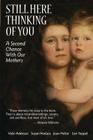
Next up, another writer about difficult women: Vicki Addesso, one of four authors of Still Here Thinking of You. It's a clear-eyed, heartbreaking, yet hopeful memoir about daughters and mothers.
Look for Vicki's post next Thursday! Here's her Tumblr.
Shop Indie Bookstores
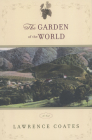
UPDATE: Another bloghopper has joined us! Lawrence Coates, the author, most recently, of The Garden of the World, writes about his forthcoming novel, The Goodbye House, here.
Shop Indie Bookstores
Shop Indie Bookstores
Now, here's an introduction to the main character of my novel, Bigfoot and the Baby. I should note that neither Bigfoot nor the Baby is actually the main character, but they are both significant characters. And you could argue that the novel has three main characters, since at various times we're inside the head of Jackie, her husband Kyle, or their daughter Katie. But I consider Jackie to be the lead, since she's the one who (I believe) undergoes and also brings about the greatest change.
I've been told she's not the easiest character to like. She certainly would be a difficult friend to have, which is possibly why she doesn't have many, at least at the novel's beginning. She's fearful, judgmental, grandiose, a little desperate. When the novel opens, she has recently latched onto an apocalyptic brand of Christianity as a way of channeling her unfocused fear and sadness, and she's trying to convince her family that the end is nigh. But they have other priorities, which she cannot understand for the life of her.
Is Jackie like me? In all but the religion, well, yes. I gave her some of my worst qualities (amplifying them, I hope, beyond their normal measure). But I also gave her a lot of my hopes--to do something important with my life, to make the world a better place, to love and be loved, fully and sincerely. And I have a lot of sympathy for women who feel they were somehow born in a place that was too small for them--who tried to do what they thought was the right thing, only to find it wasn't the right thing for them.
Jackie's world does get bigger, in a way that's currently impossible in the universe we inhabit. However, what really matters is that Jackie grows a bigger heart and a much wider field of vision by the end of the novel. I didn't necessarily expect that--but she had that in her from the beginning.
So I hope you had fun meeting Jackie.
Next up, another writer about difficult women: Vicki Addesso, one of four authors of Still Here Thinking of You. It's a clear-eyed, heartbreaking, yet hopeful memoir about daughters and mothers.
Look for Vicki's post next Thursday! Here's her Tumblr.
Shop Indie Bookstores
UPDATE: Another bloghopper has joined us! Lawrence Coates, the author, most recently, of The Garden of the World, writes about his forthcoming novel, The Goodbye House, here.
Shop Indie Bookstores
Wednesday, September 10, 2014
What did I see today?
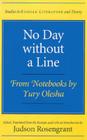
A few months back, I published a piece in the Los Angeles Review of Books about Yuri Olesha's memoir in fragments, No Day without a Line. At the end, I suggested that I planned to try the same experiment: keeping a notebook--offline--in which I wrote every day. The purpose was not only to recover a purer experience of writing in the midst of constant distraction, although that was part of it. I wanted to write in a way that placed me in a larger context than just inside my own head. I wanted to record, for better or worse, "the times."
I'm sure you've all been on the edge of your seats, wondering: How's it been going? Did she do it? Has she written every day? What are those little handwritten gems really like? Answers: So-so. Yes. No. I was amazed how quickly I regressed to my previous journal-writing habits, which is why I gave up the practice in, oh, 1995. The thing became, far more than I had hoped, Compendium of Complaints. A Litany of Laments. A Chronicle of Cranky. It's not that I ever intend these pieces to be published in this form (unlike Olesha, who was ultimately writing for publication). It's the ease with which I tumble into the black hole of solipsism as soon as I believe no one is looking.
On one hand, I obviously need some space for blowing off steam, and perhaps writing it is better than dumping it on, say, one's husband night after night. On the other hand, I'm not convinced that "venting" is really all that helpful in and of itself. And the writing it produces is altogether useless.
What to do? The solution I've come up with is, no matter what I've written previously, before I close out the daily blurb, I ask myself: What did I see today? This is a variation on one of Olesha's fragments. And it forces me to think of something, even something very small, that I've observed. Often I find myself writing about it at some length. For example, yesterday I recalled seeing, during my daily walk around the neighborhood, a film crew setting up on someone's lawn. Why? I don't know. But then I began recalling details, like a man entertaining a child (his daughter?) by placing her in the driver's seat of his car. I presume he was trying to keep her out of the film crew's way. But who knows?
Anyway, I would have entirely forgotten about that if all I'd allow myself to do was grouse. Just a suggestion for those of you seeking a way to get words on a page.
Shop Indie Bookstores
I'm sure you've all been on the edge of your seats, wondering: How's it been going? Did she do it? Has she written every day? What are those little handwritten gems really like? Answers: So-so. Yes. No. I was amazed how quickly I regressed to my previous journal-writing habits, which is why I gave up the practice in, oh, 1995. The thing became, far more than I had hoped, Compendium of Complaints. A Litany of Laments. A Chronicle of Cranky. It's not that I ever intend these pieces to be published in this form (unlike Olesha, who was ultimately writing for publication). It's the ease with which I tumble into the black hole of solipsism as soon as I believe no one is looking.
On one hand, I obviously need some space for blowing off steam, and perhaps writing it is better than dumping it on, say, one's husband night after night. On the other hand, I'm not convinced that "venting" is really all that helpful in and of itself. And the writing it produces is altogether useless.
What to do? The solution I've come up with is, no matter what I've written previously, before I close out the daily blurb, I ask myself: What did I see today? This is a variation on one of Olesha's fragments. And it forces me to think of something, even something very small, that I've observed. Often I find myself writing about it at some length. For example, yesterday I recalled seeing, during my daily walk around the neighborhood, a film crew setting up on someone's lawn. Why? I don't know. But then I began recalling details, like a man entertaining a child (his daughter?) by placing her in the driver's seat of his car. I presume he was trying to keep her out of the film crew's way. But who knows?
Anyway, I would have entirely forgotten about that if all I'd allow myself to do was grouse. Just a suggestion for those of you seeking a way to get words on a page.
Shop Indie Bookstores
Monday, September 08, 2014
Hovering and recovering
Ah, my poor, neglected blog. For the past two weeks I've been on vacation, trying and largely failing to say away from all electronic communications. The need to promote the book hovers, always, like a mild illness. I am not doing enough. I know I am not doing enough. But I cannot make myself do any more. Well, maybe a little more. Like what? I don't have the foggiest. Well, I kind of do. More appearances. More approaching strangers, offering the irresistible chance to meet me. More guest posts. More tweets (about what?). More Facebook (god help me). More ... just more.
It's certainly not the worst fate to befall anyone. And I brought it on myself. Maybe I'm even getting a little better at it. Then again, is it working?
Anyway, here's a picture from our trip to Olympic National Park. It was a beautiful day at Hurricane Ridge.

It's certainly not the worst fate to befall anyone. And I brought it on myself. Maybe I'm even getting a little better at it. Then again, is it working?
Anyway, here's a picture from our trip to Olympic National Park. It was a beautiful day at Hurricane Ridge.
Tuesday, August 19, 2014
Of small presses and agents
At Litquake Palo Alto last Sunday, where I was on the Breakthrough Novelists panel, an audience member asked each of us how we got our agents. When it came to my turn, I said, "I don't have an agent," and was passing the mic along when several people shouted, "Wait! Then how did you get published?"
The answer: a small press. Many people don't realize that small presses, including my publisher, Bona Fide Books, will often accept unagented submissions. Small presses are also awesome because they exist to take chances that larger publishers can't afford--on unknown authors and odd, hard-to-categorize books (like mine). The publishers are almost always writers themselves, and they love literature. They're not in it for the money, but to keep what they love alive.
Poets and Writers has a small press database, which is a good place to start looking. Another fun way to get acquainted with small presses is to play Small Press Roulette. You send them money, and they send you a grab-bag of small press publications, including books and zines. Look what I got!

All that said, however, I do plan on querying agents for my new novel, starting this fall. This book is a tad more mainstream, I think, and I certainly would like to reach a larger audience. At the same time, though, I'm going to keep the small press option on the front burner, because I've loved the whole experience, and I believe in the mission.
Think of it this way: if you like independent films, you'll like small presses, too.
The answer: a small press. Many people don't realize that small presses, including my publisher, Bona Fide Books, will often accept unagented submissions. Small presses are also awesome because they exist to take chances that larger publishers can't afford--on unknown authors and odd, hard-to-categorize books (like mine). The publishers are almost always writers themselves, and they love literature. They're not in it for the money, but to keep what they love alive.
Poets and Writers has a small press database, which is a good place to start looking. Another fun way to get acquainted with small presses is to play Small Press Roulette. You send them money, and they send you a grab-bag of small press publications, including books and zines. Look what I got!
All that said, however, I do plan on querying agents for my new novel, starting this fall. This book is a tad more mainstream, I think, and I certainly would like to reach a larger audience. At the same time, though, I'm going to keep the small press option on the front burner, because I've loved the whole experience, and I believe in the mission.
Think of it this way: if you like independent films, you'll like small presses, too.
Tuesday, August 12, 2014
How to network and not to network (by a bad networker)
I am a bad networker.
Well, I'm probably not as bad as I used to be. The need to "network" was first impressed upon me rather late in life, because I was particularly resistant to having that sort of impression made upon me in the first place. It was toward the end of graduate school, when it became apparent that simply sending out CVs and writing samples and waiting for the interview invitations to roll in was not going to work. (I can't quite convey how shocking this news really was to me. I was that naive--and that resistant to networking.) My adviser suggested going to conferences, even ones I was not presenting at (which constituted the almost infinitely greater majority), and--get this--hand out business cards.
How the hell was I supposed to actually accomplish this was not clear. This particular culture did not seem to come with a ritual of exchanging cards upon introduction. Let's just skip ahead now and say I at the first and only conference where I attempted this, I managed to rid myself of precisely one card. I did it by interrupting the conversation of someone I had talked to on the shuttle, saying "Do you want a card?," thrusting it at her, and then racing off, my face hot with shame.
That was the last networking I did for about a decade.
For some people, networking seems to come quite a bit more naturally. Not (as I was taught) because they are cynical users of others, always alert for opportunities to advance their own interests and equally blind to the pain their self-advancement inflicts on those they use and then cast aside like so many used tissues--but because they understand that people need other people just to get through life. Professional life (and related stuff like, you know, promoting your novel) is part of the life that we need help with. Asking for help is not the same as using.
This is especially--and, in fact only--true if you approach the whole networking process with the mindset of trying to help others. Of course one can never set one's mind purely on this goal (by "one," I mean myself, anyway)--but I think it's worth trying to focus on opportunities to assist others, particularly at first. To piggyback on my last post, let's say you want to join a writing group. If you only want to join so that others will help you with your work, you'll have a problem. People will notice that you show up only when you have a story under review. They may not kick you out, but they won't feel like you're fully part of the group.
To network effectively, you must sincerely want to be part of something larger than yourself, to do your part in meeting the group's goals--even if those goals include each individual's desire to advance. We all want to succeed, and we don't have to help others succeed at our own expense. In the same way, we don't have to succeed at others' expense.
Networking, done sincerely, just means helping each other. It's really that simple. I wish I'd figured that out a lot earlier.
Well, I'm probably not as bad as I used to be. The need to "network" was first impressed upon me rather late in life, because I was particularly resistant to having that sort of impression made upon me in the first place. It was toward the end of graduate school, when it became apparent that simply sending out CVs and writing samples and waiting for the interview invitations to roll in was not going to work. (I can't quite convey how shocking this news really was to me. I was that naive--and that resistant to networking.) My adviser suggested going to conferences, even ones I was not presenting at (which constituted the almost infinitely greater majority), and--get this--hand out business cards.
How the hell was I supposed to actually accomplish this was not clear. This particular culture did not seem to come with a ritual of exchanging cards upon introduction. Let's just skip ahead now and say I at the first and only conference where I attempted this, I managed to rid myself of precisely one card. I did it by interrupting the conversation of someone I had talked to on the shuttle, saying "Do you want a card?," thrusting it at her, and then racing off, my face hot with shame.
That was the last networking I did for about a decade.
For some people, networking seems to come quite a bit more naturally. Not (as I was taught) because they are cynical users of others, always alert for opportunities to advance their own interests and equally blind to the pain their self-advancement inflicts on those they use and then cast aside like so many used tissues--but because they understand that people need other people just to get through life. Professional life (and related stuff like, you know, promoting your novel) is part of the life that we need help with. Asking for help is not the same as using.
This is especially--and, in fact only--true if you approach the whole networking process with the mindset of trying to help others. Of course one can never set one's mind purely on this goal (by "one," I mean myself, anyway)--but I think it's worth trying to focus on opportunities to assist others, particularly at first. To piggyback on my last post, let's say you want to join a writing group. If you only want to join so that others will help you with your work, you'll have a problem. People will notice that you show up only when you have a story under review. They may not kick you out, but they won't feel like you're fully part of the group.
To network effectively, you must sincerely want to be part of something larger than yourself, to do your part in meeting the group's goals--even if those goals include each individual's desire to advance. We all want to succeed, and we don't have to help others succeed at our own expense. In the same way, we don't have to succeed at others' expense.
Networking, done sincerely, just means helping each other. It's really that simple. I wish I'd figured that out a lot earlier.
Monday, August 04, 2014
Why you really, really need a writing community
Several years ago, I was in a writing group that I adored. But that group gradually fell away, as these things sometimes do, and so for a number of years I didn't have a group. That seemed fine; I was writing a novel, and I didn't necessarily want anyone reading it piecemeal as I went. I thought I should just stay by myself and plug away till it was finished. Then we'd see.
This is only a small sample of what writing communities can do. So even if you have no work you want to share at the moment, I strongly recommend joining one or more groups, in person and/or online. It makes a remarkable difference, believe me.

Of course, what I didn't realize--and what I now understand, thanks to several new groups I've joined lately--is that the community doesn't just exist to give critiques. (And it certainly shouldn't exist just to give critiques to me.) Apart from the amorphous though extremely important function of offering moral support, a community can:
- Go to events together
- Create events and invite speakers
- Join together to give readings where individual speakers might not draw a big enough crowd
- Help publicize each other's work
- Recommend (or warn you away from) agents, publishers, publicists, etc.
- Advocate for one another and for fellow authors worldwide
- Eat good food and drink good wine
- Pull each other out of literary and personal ruts
Here I am with some of my writing buddies, at our party yesterday ...
Friday, July 25, 2014
A few meandering thoughts about writer's block
We've all heard way too much about this mythical ailment, mostly from the movies, because 1.) people who write movie scripts are writers and are writing what they know, and 2.) as has been pointed out repeatedly, writers actually writing aren't very interesting to watch; the "block" is the only way to get them out of the house.
That said, I don't think "writer's block" is much different from any kind of procrastination brought on by doubt or fear. In my case, anyway, my reasons for not writing usually boil down to thinking it's not going to work. I don't want to spend two or four or eighty or ten thousand hours on something that's going to be bad, do I? In the same way, I don't want to cut back on carbs because it probably won't make me feel better; I don't want to see a movie because I might not like it; I don't want to go grocery shopping because I'm afraid of the parking lot; I don't want to work because I'm lazy ... or, I mean, it might not be satisfying.
Still, in most of these cases, I do the thing anyway. Sometimes, as with work, there's a concrete financial incentive. But other times I'm able to get past my objections relatively easily. How do you know it won't work if you don't try it? I ask myself, and then away go the carbs--at least for a little while. But with writing the resistance seems greater, and I can only think that, unlike these other issues, my ability to write says something fundamental about me. Writing something bad means I'm not really a writer after all, which means the only certain way to preserve the illusion that I am a writer is not to write.
So how to combat this? Maybe by remembering that writer's block is the ultimate absurd condition--and just writing any goddamn thing you can.
That said, I don't think "writer's block" is much different from any kind of procrastination brought on by doubt or fear. In my case, anyway, my reasons for not writing usually boil down to thinking it's not going to work. I don't want to spend two or four or eighty or ten thousand hours on something that's going to be bad, do I? In the same way, I don't want to cut back on carbs because it probably won't make me feel better; I don't want to see a movie because I might not like it; I don't want to go grocery shopping because I'm afraid of the parking lot; I don't want to work because I'm lazy ... or, I mean, it might not be satisfying.
Still, in most of these cases, I do the thing anyway. Sometimes, as with work, there's a concrete financial incentive. But other times I'm able to get past my objections relatively easily. How do you know it won't work if you don't try it? I ask myself, and then away go the carbs--at least for a little while. But with writing the resistance seems greater, and I can only think that, unlike these other issues, my ability to write says something fundamental about me. Writing something bad means I'm not really a writer after all, which means the only certain way to preserve the illusion that I am a writer is not to write.
So how to combat this? Maybe by remembering that writer's block is the ultimate absurd condition--and just writing any goddamn thing you can.
Thursday, July 17, 2014
Five things I miss about grad school
It occurs to me that I have said some negative things about grad school of late. Also of early. And yet I read an article just today that made me nostalgic for the kinds of issues that used to dominate my consciousness on a regular basis.
Have I gone soft? Am I forgiving, or simply forgetting? Who knows. Herewith, a gradschoolisticle of stuff I miss about those glory/gory days.
1. Heated debates about Freud in particular. (I'm mostly in the "against" camp, but I get the appeal, especially for literary folk.)
2. The sense that one's primary purpose, for the next 5-7 years, was to learn. OK, that probably sounds even more naive now than it did then. In reality, one's primary purpose was--or probably should have been, if one had any kind of instinct for material success, which I most certainly did not--building one's career. You mean it's your second semester and you haven't published anything yet? Aren't you going to MLACLAHASA? Still, living in an environment explicitly dedicated to intensive learning and intellectual discovery was quite a privilege. And being identified primarily by my ideas, while not always beneficial, was an interesting experience.
3. A very nice (for me) balance between responsibility and freedom. Papers had to be written, classes (at first) had to be attended. Still, I had a lot of unstructured time, and could get things done mostly in my own way.
4. The intense focus. Sometimes that got a little too much for me. But the ability to spend days or weeks on the meaning of a single sentence, maybe even a single word (yes, I was a New Critic at heart) seems exceedingly refreshing to me now--when often any act of reading, as opposed to skimming, feels like a chore.
5. Many of the people.
Have I gone soft? Am I forgiving, or simply forgetting? Who knows. Herewith, a gradschoolisticle of stuff I miss about those glory/gory days.
1. Heated debates about Freud in particular. (I'm mostly in the "against" camp, but I get the appeal, especially for literary folk.)
2. The sense that one's primary purpose, for the next 5-7 years, was to learn. OK, that probably sounds even more naive now than it did then. In reality, one's primary purpose was--or probably should have been, if one had any kind of instinct for material success, which I most certainly did not--building one's career. You mean it's your second semester and you haven't published anything yet? Aren't you going to MLACLAHASA? Still, living in an environment explicitly dedicated to intensive learning and intellectual discovery was quite a privilege. And being identified primarily by my ideas, while not always beneficial, was an interesting experience.
3. A very nice (for me) balance between responsibility and freedom. Papers had to be written, classes (at first) had to be attended. Still, I had a lot of unstructured time, and could get things done mostly in my own way.
4. The intense focus. Sometimes that got a little too much for me. But the ability to spend days or weeks on the meaning of a single sentence, maybe even a single word (yes, I was a New Critic at heart) seems exceedingly refreshing to me now--when often any act of reading, as opposed to skimming, feels like a chore.
5. Many of the people.
Monday, July 07, 2014
The poet's brain in a jar
Here's a little coda to my piece in the LA Review of Books on Yuri Olesha's memoir-in-fragments, No Day without a Line. I tried so hard to get this into the piece, but it just wouldn't go ... So here it is.
In the section of No Day called Moscow, Olesha writes about several famous Russian writers he befriended in the early twentieth century. He was particularly close with the futurist poet Vladimir Mayakovsky, who committed suicide ... leading to this amazing memory:
This scene, surreal even by Olesha's standards, defies belief. And yet, recently, an intrepid reporter from Vice Magazine, Joy Neumeyer, paid a visit to the Moscow Brain Institute. There she found Mayakovsky's brain, residing in a jar alongside those of many other luminaries. She even quotes Olesha to explain how the brain got there.
So Olesha was not making this up. As Neumeyer explains, "When a Soviet celebrity died, the brain-collection process worked in one of two ways. Sometimes, the family or the deceased had already agreed to give their brains to the Institute. Or—as in the case of Mayakovsky—they came without asking."
In the section of No Day called Moscow, Olesha writes about several famous Russian writers he befriended in the early twentieth century. He was particularly close with the futurist poet Vladimir Mayakovsky, who committed suicide ... leading to this amazing memory:
When the evening after his death we had gathered on Gendrikov Lane in ... the Briks' apartment [where Mayakovsky had been living], we suddenly heard loud noises coming from Mayakovsky's room--very loud noises, unceremoniously loud, as if somebody were chopping wood. It was the opening of Mayakovsky's cranium to allow the removal of his brain. We listened in horror-struck silence. Then a man in a white gown and boots came out of the room--either an attendant or a medical assistant, but a stranger to us--and in his hands he held a basin covered with a white cloth raised in the middle almost like a pyramid, indeed, just as if that soldier in boots had been carrying a paschal cream-cheese pudding. In the basin was Mayakovsky's brain.
This scene, surreal even by Olesha's standards, defies belief. And yet, recently, an intrepid reporter from Vice Magazine, Joy Neumeyer, paid a visit to the Moscow Brain Institute. There she found Mayakovsky's brain, residing in a jar alongside those of many other luminaries. She even quotes Olesha to explain how the brain got there.
So Olesha was not making this up. As Neumeyer explains, "When a Soviet celebrity died, the brain-collection process worked in one of two ways. Sometimes, the family or the deceased had already agreed to give their brains to the Institute. Or—as in the case of Mayakovsky—they came without asking."
Thursday, July 10: Reading at Folio Books, San Francisco
Join us at Folio Books, the wonderful Noe Valley bookstore, on Thursday, July 10, at 7 p.m. to celebrate Bigfoot and the Baby. We'll have wine, a reading, Q and A, and ... possibly a Special Guest!

Thursday, July 03, 2014
The Writer in Pieces
My essay on Yuri Olesha's No Day without a Line, which records his struggle to relearn how to write, is up at The Los Angeles Review of Books.
Wednesday, July 02, 2014
What do you want from an author reading? (updated)
This issue has been on my mind, since, you know, I'm now doing readings somewhat regularly. Having attended many bad author events that resemble ritual obeisances akin to church--from which the bored audience members, like bored parishioners, feel ecstatic to be freed--I promise to try my damnedest not to let this happen at my readings.
On the other hand, certain ritualistic behaviors are expected. At some point, the author reads from her work--presumably to entice audience members who don't know the book to buy it, as well as to offer some deeper interpretation to readers who may already know the story. The author then takes questions and signs books. Schmoozing, perhaps with alcoholic beverages, may occur before, during, or after.
Given this general format, what can an author do to not only limit the pain she inflicts on the audience, but actually turn the evening into an enjoyable event? First, as I've said before, it probably wouldn't kill you to take some acting lessons. Second, read and consider everything in this post. Third--well, maybe this is obvious, but I honestly didn't reflect on it until just now--think of what you'd enjoy most from an author reading, and do that--because your audience is probably made up of people much like you.
So what do I especially enjoy at a reading?
1. A good performance (see above).
2. Interesting information, particularly about the writing process. The audience is probably full of aspiring as well as successful writers. And we all love to find out how others do it.
3. A sense that the author is genuinely glad to be there and excited to share her work. For the introverts among us, this can be a tad difficult to pull off. I can say that my acting lessons helped with this aspect, too--not least in building my confidence, which (I hope) translates into greater ease in public.
4. A sense that the writer is not only there to promote her particular book, but to take part in a larger conversation. In other words, believing that the author cares about writing and her subject in general, and that she sees the audience as contributing to her understanding. In still other words, I want to feel like part of a spontaneously formed community around a topic of common interest--not like a vessel receiving 40 minutes of promo.
I'm sure there's more.
Of course, for all of this to happen, you also need a good audience. Not necessarily a large one--though a tiny one can certainly feel dispiriting--but one that's rooting for you and your event to succeed. Which, fortunately, is usually the case, given that they showed up in the first place.
UPDATE: But read this post by Jennifer Margulis, which describes what can happen, all too often, and what we can do to fix it.
On the other hand, certain ritualistic behaviors are expected. At some point, the author reads from her work--presumably to entice audience members who don't know the book to buy it, as well as to offer some deeper interpretation to readers who may already know the story. The author then takes questions and signs books. Schmoozing, perhaps with alcoholic beverages, may occur before, during, or after.
Given this general format, what can an author do to not only limit the pain she inflicts on the audience, but actually turn the evening into an enjoyable event? First, as I've said before, it probably wouldn't kill you to take some acting lessons. Second, read and consider everything in this post. Third--well, maybe this is obvious, but I honestly didn't reflect on it until just now--think of what you'd enjoy most from an author reading, and do that--because your audience is probably made up of people much like you.
So what do I especially enjoy at a reading?
1. A good performance (see above).
2. Interesting information, particularly about the writing process. The audience is probably full of aspiring as well as successful writers. And we all love to find out how others do it.
3. A sense that the author is genuinely glad to be there and excited to share her work. For the introverts among us, this can be a tad difficult to pull off. I can say that my acting lessons helped with this aspect, too--not least in building my confidence, which (I hope) translates into greater ease in public.
4. A sense that the writer is not only there to promote her particular book, but to take part in a larger conversation. In other words, believing that the author cares about writing and her subject in general, and that she sees the audience as contributing to her understanding. In still other words, I want to feel like part of a spontaneously formed community around a topic of common interest--not like a vessel receiving 40 minutes of promo.
I'm sure there's more.
Of course, for all of this to happen, you also need a good audience. Not necessarily a large one--though a tiny one can certainly feel dispiriting--but one that's rooting for you and your event to succeed. Which, fortunately, is usually the case, given that they showed up in the first place.
UPDATE: But read this post by Jennifer Margulis, which describes what can happen, all too often, and what we can do to fix it.
Tuesday, June 24, 2014
This Thursday: Bay Area Launch of Bigfoot and the Baby!
This Thursday, June 26, join us at Village House of Books in Los Gatos to celebrate the release of Bigfoot and the Baby! Music, food, and schmoozing start at 6 p.m., and the reading starts at 7.

I would love to see you there!
I would love to see you there!
Subscribe to:
Posts (Atom)